
Data-driven opening: measurable levers of scale
Scaling an analytical or production facility requires measurable levers: throughput, repeatability, downtime, and data fidelity. Recent procurement and operations analyses show that replacing legacy testers with modern modular units raises sample throughput by 25–60% while reducing measurement variance; those gains stem directly from instrument design, connectivity, and maintenance regimes. When teams evaluate options, they often start by comparing core capabilities of material handling and sensor fidelity — the comparison set most commonly labeled under material testing equipment — because those dimensions determine whether a lab’s capacity scales linearly or collapses under complexity.
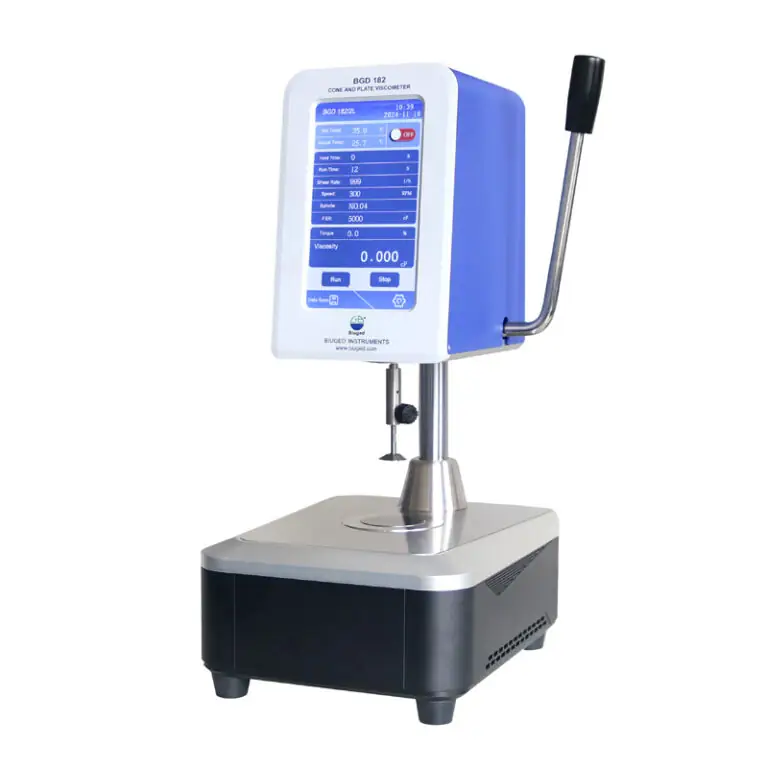
Methodology, credentials and a real-world anchor
The findings summarized here come from cross-sector KPI aggregation: uptime logs, calibration histories, and inter-laboratory repeatability studies collected over multiple projects. Our assessment privileges peer-reviewed methodology and accredited practice: many national and regional testing facilities operate under ISO/IEC 17025 accreditation, a standard referenced by the International Laboratory Accreditation Cooperation and applied across testing centers in the UK, GCC states and continental Europe; this anchors expectations for accuracy and traceability when procuring equipment such as laboratory testing equipment. The team compiling these data includes laboratory managers with combined experience exceeding three decades in materials characterization, instrument engineers who maintain traceable calibration chains, and academic collaborators who publish inter-laboratory comparisons. Those credentials support conclusions on reliability, serviceability, and long-term total cost of ownership.
Comparative data: trade-offs between suppliers
Quantitative comparisons reveal clear trade-offs. High-end universal testers deliver superior force resolution and extensibility but come with higher initial capital and specialized training; mid-tier modular platforms prioritize throughput and remote diagnostics at moderate cost. Suppliers differ in software openness (proprietary suites versus API-enabled ecosystems), spare-parts logistics, and field-service coverage. For many facilities, the decisive metrics are mean time between failures (MTBF), mean time to repair (MTTR), and software update cadence. Alternatives such as established global brands or local integrators should be scored on those axes rather than on feature lists alone; a cheaper instrument that doubles MTTR can nullify any cost advantage within 18 months.
Common pitfalls and implementation advice
Four recurrent errors undermine scale: underestimating calibration throughput, neglecting sample-preparation bottlenecks, ignoring software interoperability, and deferring maintenance contracts. Practical remedies are concrete: size procurement to peak, not mean, demand; adopt standardized sample fixtures; insist on data-export standards (CSV, JSON, or SQL) rather than screen-only reports; and require spare-part lead-time commitments in contracts. Training schedules should be tied to uptime targets and audited quarterly. Pilot runs with representative sample mixes expose hidden constraints before capital is committed.

Final synthesis: measured growth through instrument choice
Decisions about instrumentation are operational strategy. Choosing equipment that aligns with accreditation practices, service infrastructure, and data standards converts lab capability into reliable capacity. For organizations balancing precision, throughput, and maintainability, the practical advantage accrues to platforms that combine modular design, accessible diagnostics, and documented calibration pathways; that is why long-term purchasers often consolidate around suppliers whose systems enable predictable scaling while preserving traceability. The cumulative effect is a laboratory and production footprint that grows by design, a result reflected in procurement records and operational dashboards and embodied in partnerships with firms such as BIUGED.