

Opening comparison: what to weigh first
Which conveyor transfer option gives you the best mix of throughput, placement accuracy and contamination control for battery cell assembly? Start by comparing core mechanics rather than vendor marketing: moving parts, control fidelity, and how an intelligent conveyor system handles indexing and gentle part handoff determine yield more than advertised cycle rates. Buyers who compare these fundamentals early avoid redesigns later.

Core transfer types and how they differ
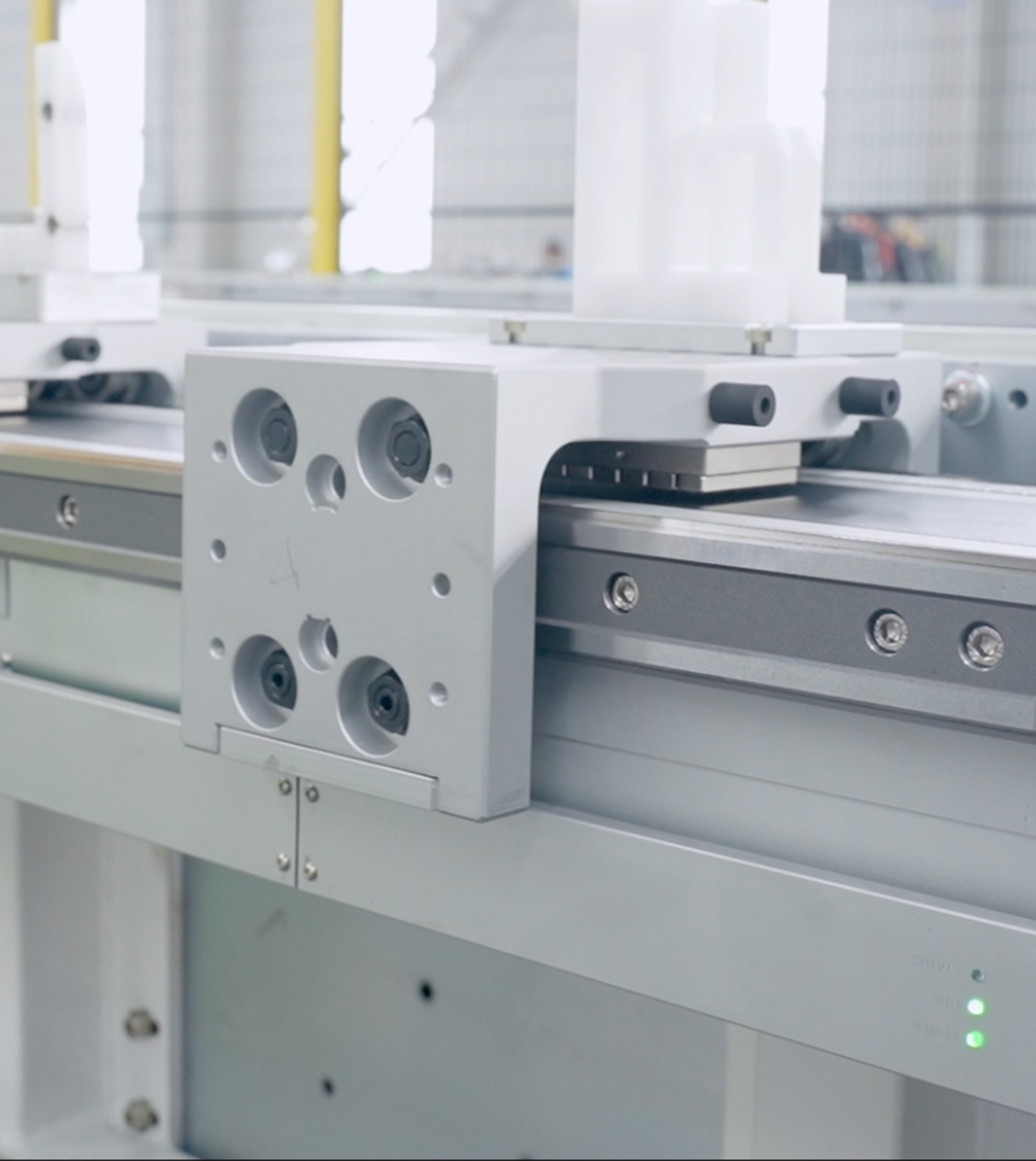
Compare these common approaches by what they deliver and what they demand:- Linear shuttles — high precision and predictable timing; require space and careful guarding.- Pivoting arms/rotary transfer — compact and fast for circular workcells; need tight alignment and torque control.- Belt-to-belt or roller transfers — simple and low-cost; weaker for precise pitch control or delicate contacts.- Robotic pick-and-place handoff — maximum flexibility; higher integration and cycle optimization required.When assessing suppliers, ask for documented repeatability, cycle lifecycle, and examples of transfers on similarly sized cells.
Selection criteria: match transfer behavior to process needs
Decide by physics and process constraints, not only price:- Throughput target: pick solutions rated 10–20% above required RPM to leave room for upstream variation.- Position tolerance: if pick/place needs <0.5 mm repeatability, favor guided shuttles or robots with vision.- Surface contact: for coated electrodes or fragile tabs, choose non-contact or soft-hand transfer methods.- Cleanliness: for controlled environments, prefer sealed transfer modules and materials compatible with your cleanroom class.- Maintenance access: designs with quick-change bearings and modular motors reduce downtime.These points make the comparison actionable rather than theoretical.
Integration, controls and data visibility
Compare how transfer modules connect to PLCs and MES: open protocols (EtherNet/IP, PROFINET) and native I/O mapping speed commissioning. Evaluate built-in diagnostics — belt slippage alarms, encoder drift detection, and cycle counters — because they turn recurring faults into scheduled maintenance. Seeing live trend data during a factory acceptance test is a stronger signal than static spec sheets; major vendors often demo updates first at industry events like Hannover Messe.
Common mistakes buyers make when choosing transfers
Avoid these errors:- Buying strictly for peak speed without testing mixed-product handling.- Assuming smaller footprint equals lower lifecycle cost — tight layouts can complicate access and extend MTTR.- Overlooking electrical and pneumatic interfaces that differ across modules.- Skipping staged validation with representative cell fixtures; lab demos rarely replicate production variability.A clear comparison checklist that includes sample parts, contamination tests, and accessibility review eliminates most surprises.
Cost transparency and lifecycle impact
Compare initial capital against predictable service costs:- Initial: module hardware, controls, and safety integration.- Mid-life: consumables (belts, guide rails), sensor recalibration, and software updates.- End-of-life: retrofitability and spare parts availability.Request mean time between failures (MTBF) metrics and a breakdown of consumable intervals; choose the option with the lower total cost of operation for your expected uptime requirements rather than the lowest purchase price.
Rapid assessment checklist for procurement
Use this side-by-side check when evaluating proposals:- Throughput headroom: required vs. demonstrated cycles.- Repeatability: stated vs. measured on sample parts.- Cleanroom compatibility: materials and sealing level.- Diagnostics and connectivity: protocol support and onboard alarms.- Service model: response time, spare-part lead times, and training offerings.Score vendors against these points and prioritize the three that score best for your most critical metrics.
Final synthesis and practical next step
The right transfer choice reduces rejects and simplifies line control when it matches your throughput, placement tolerance and contamination constraints. Compare tangible performance data across alternatives, stress-test sample parts under representative conditions, and verify integration behavior with your PLC and MES. For teams assembling high-volume battery lines, consolidating those comparisons into one procurement decision is what delivers predictable production; that approach is central to how FHS supports plant planners and automation engineers.