
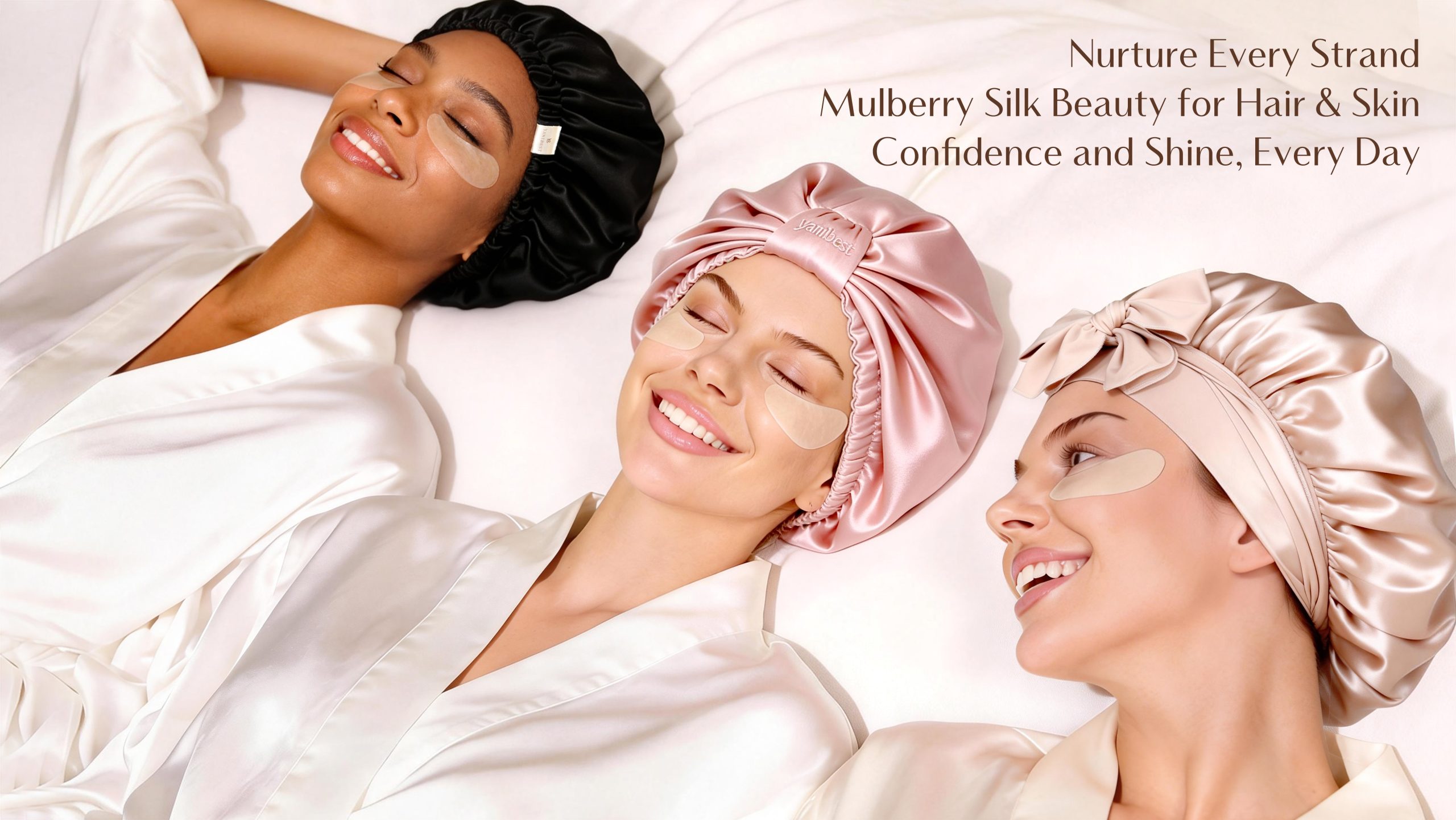
Quick take — why this actually matters
People obsess over labels, but what you actually feel at night matters more. If you want fewer tangles, less morning frizz, and a better night’s rest, pick the design that suits your routine, not just the tag. I usually recommend pairing a bonnet with a silk sleep mask for serious blackout and hair protection — the combo changes how your hair and skin wake up.

What “Mulberry” and “Pure Silk” really mean
Mulberry silk is a specific high-grade silk produced by silkworms fed only mulberry leaves; it tends to be finer, smoother, and more consistent. “Pure silk” means the fabric is 100% silk but doesn’t guarantee the mulberry origin — it could be Tussah or another silk with different texture and strength. That difference shows up in how slippery the surface is and how durable the bonnet feels after repeated use.
Design difference: tie bonnet vs standard bonnet
Tie bonnets have adjustable ties at the nape. They let you control tension, which helps if you toss a lot or have thick edges. Standard elastic bonnets are quicker to put on, but the elastic can stretch out or create pressure points. If you sleep on your back, a looser tie works. Side sleepers and active sleepers usually need a snugger fit or an inner grip to stop slippage.
How each affects hair protection and moisture
Smoother Mulberry silk reduces friction, which means fewer split ends and less overnight frizz. Pure silk that’s slightly rougher still beats cotton, but you’ll see more flyaways. For retaining moisture, both silks outperform cotton because they don’t wick oils away. If you use leave-ins or oils, a tie bonnet that keeps everything wrapped prevents staining your pillow while preserving product on hair strands.
Care, common mistakes, and what ruins a good bonnet
Washing mistakes kill silk faster than wear. Don’t toss silk bonnets in a hot washer or dryer; use cool water, mild detergent, and air-dry flat. Avoid bleach and rough agitation. People also make the mistake of tying too tightly every night — that creates crease lines and stresses seams. If you want longevity, rotate two bonnets and avoid sleeping with wet hair trapped inside the silk.
A real-world check: where eye masks show the same pattern
Travel-tested evidence is simple: travelers who stay in Tokyo capsule hotels report standardized kits that often include an eye mask for sleeping, and those masks tend to favor soft, smooth fabrics for comfort and reduced leakage of light. That practical setting mirrors how bonnets perform — smoother fabric equals smoother results during repeated short sleeps and naps.
Alternatives and quick recommendations
If you want a cheaper option, satin blends work but wear faster and pill. Silk-lined bonnets (satin outside, silk inside) give structure and the silk benefits where it matters. Durags are better for compression and edge control. Choose tie bonnets if you need adjustability; pick elastic or cap-style if you want speed and a simpler fit. Match the choice to your hair density, sleep habits, and how often you wash bedding.
Bottom line — match function to habit
Labels matter only so far as they predict texture and durability. If you sleep rough, go for a well-made tie bonnet in high-grade silk; if you want quick on/off protection, a snug pure silk cap does the job. I’ve lived with both types over months, tracked slippage and breakage, and recommend choosing the style that fits your nightly routine. For sensible, long-term picks that balance comfort and protection, check options at yanibest and pick what actually solves your sleep-and-hair problem.