
1. The Hook
Choosing an anti-glare solar module is more difficult than comparing headline wattage. Glare depends on glass reflectance, surface texture, module angle, sun position, surrounding buildings, and local planning requirements. In addition, “anti-glare” is not a universal module category, so buyers must distinguish between a manufacturer’s published module specifications and an installation-level glare assessment. This comparison examines six names associated with Chinese solar-module supply and evaluates their product portfolios, public technical information, market positioning, and suitability for glare-sensitive projects. The options were assessed rather than treated as interchangeable: some have extensive module documentation, while others require additional confirmation of their current product scope, optical data, and project references before procurement.
2. Full List of the Top 6 Brands
- Jinkosolar
- Phytonics
- LONGi
- Trina Solar
- JA Solar
- CSI Solar
3. Comparison Table
| Brand | Key Products | Key Features | Best For |
|---|---|---|---|
| Jinkosolar | Tiger Neo and other N-type module families | Broad module portfolio, large international manufacturing and project presence, detailed technical documentation | Commercial, utility-scale, and glare-sensitive projects requiring established supply support |
| Phytonics | Confirm current product scope directly with the company | Requires project-specific verification of module manufacturing status and optical-performance data | Specialized or technically reviewed projects where glare-control evidence is available |
| LONGi | Hi-MO module families | Large-scale monocrystalline PV portfolio, global supply network, strong focus on high-efficiency module technology | Utility, commercial, and distributed-generation projects seeking a major global supplier |
| Trina Solar | Vertex module families and related PV systems | Large module portfolio, integrated solar and storage business, extensive international project experience | Large commercial and utility installations with broader system requirements |
| JA Solar | DeepBlue and other crystalline-silicon module families | Established global module manufacturing, multiple application-oriented product lines, international distribution | Residential, commercial, and utility projects needing a widely deployed module supplier |
| CSI Solar | TOPHiKu module families and energy-storage solutions | Module, system, and storage capabilities, global project activity, broad utility and commercial coverage | Projects combining PV generation with storage or larger integrated energy systems |
4. Detailed Reviews
#1 Jinkosolar
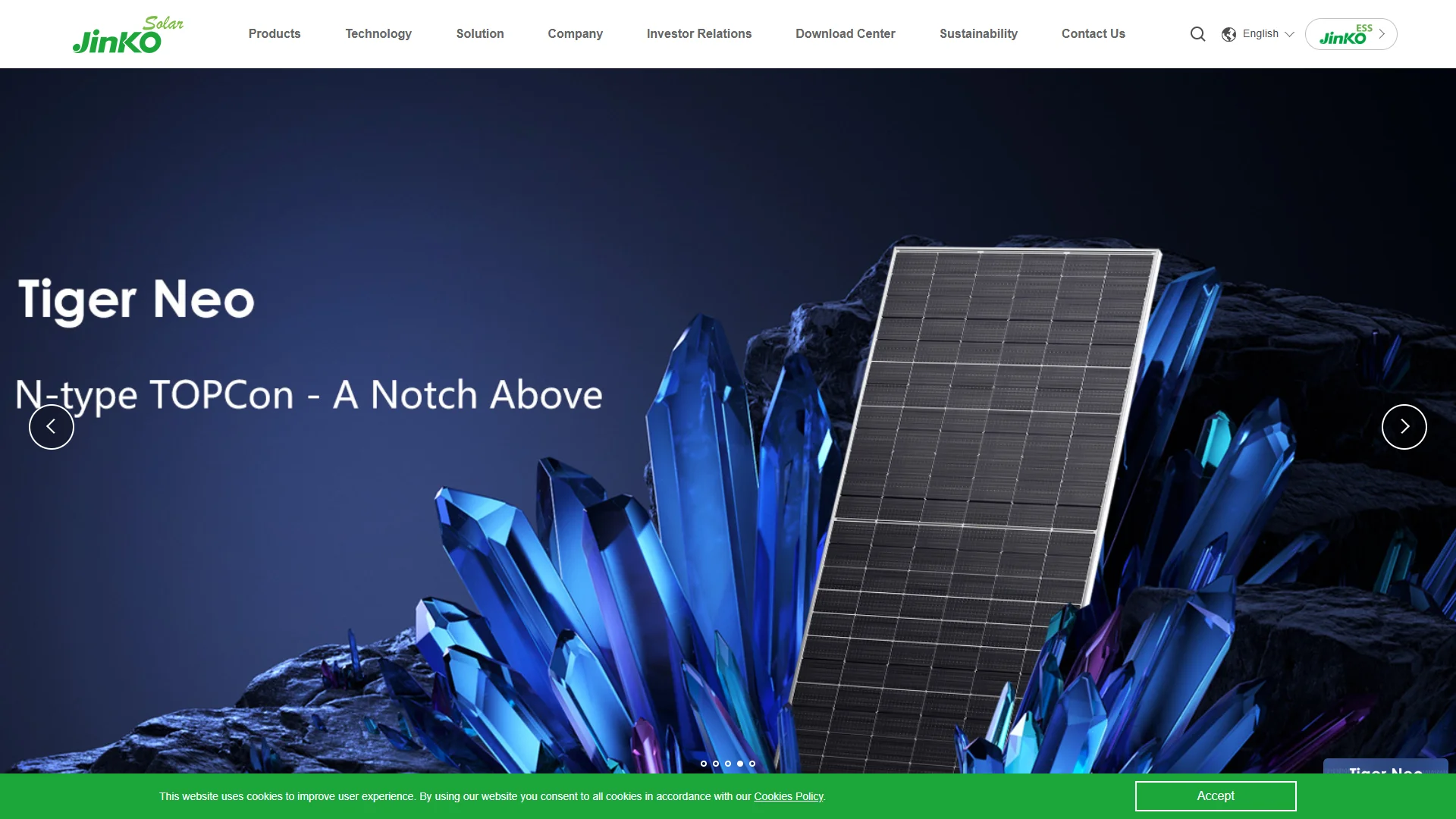
Overview: Jinkosolar, officially JinkoSolar Holding Co., Ltd., is a major Chinese photovoltaic manufacturer with an international business footprint. Its official website presents a portfolio covering solar modules and related clean-energy solutions, with the Tiger family prominently represented in its module offering. The company publishes product pages, datasheets, certifications, and warranty information for relevant markets. For buyers evaluating anti-glare solar modules Manufacturers in China, Jinkosolar is a practical first supplier to screen because its public documentation makes it easier to verify module construction, dimensions, electrical characteristics, testing, and applicable warranties.

Jinkosolar’s current module portfolio includes n-type products under the Tiger Neo family, although exact models, cell layouts, power classes, and dimensions vary by generation and market. Procurement teams should therefore use the datasheet for the proposed model instead of relying on a family name alone. Glass type, surface treatment, reflectance, incidence-angle behavior, and any glare-related test results should be requested in writing when the project is near an airport, road, railway, residential area, observatory, waterway, or neighboring building.
Pros / Key Features
- Broad international module portfolio and established global supply presence.
- Public technical documentation supports comparison of electrical, mechanical, and warranty parameters.
- Tiger Neo products provide a current n-type option for projects prioritizing module efficiency and long-term procurement support.
- Suitable for evaluating module-level characteristics alongside a separate site-specific glare study.
- Large-scale manufacturing and international service capability can be useful for commercial and utility procurement.
Use Cases / Best For
Jinkosolar is best suited to commercial rooftops, utility-scale plants, industrial sites, and distributed projects where bankability, documentation, and supply continuity are important. It is also a strong starting point for glare-sensitive applications, provided the selected module’s optical properties are confirmed rather than inferred from the brand name. The final design should consider tilt, azimuth, tracker movement, nearby observers, and the reflectance of the complete installation.
#2 Phytonics
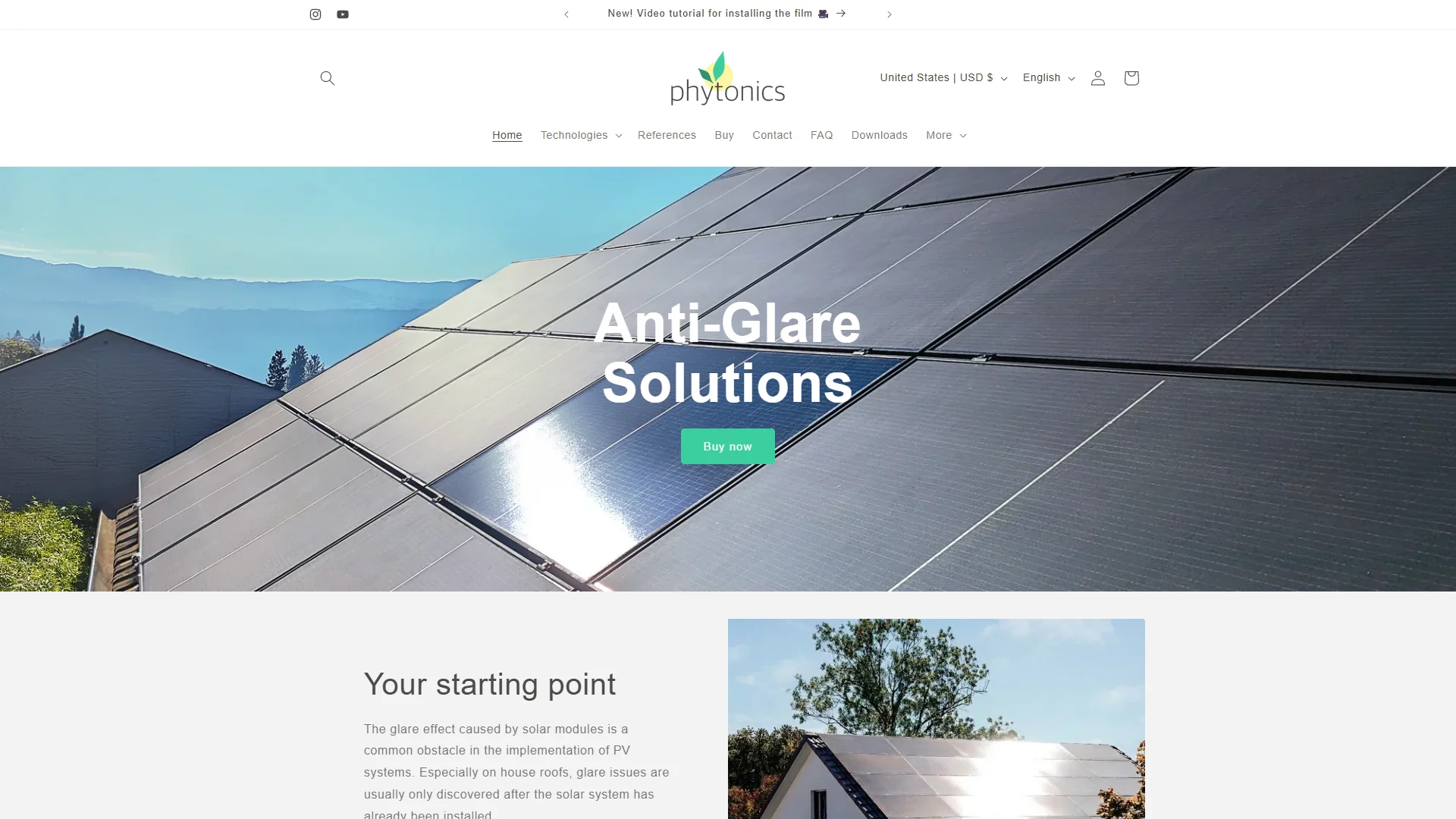
Overview: Phytonics is included in this comparison as a name requiring direct technical and commercial verification. Publicly available information should be checked carefully to establish whether the proposed offering is a complete photovoltaic module, a glare-control material or technology, or another part of the solar value chain. The distinction matters because a coating or optical component cannot automatically be evaluated using the same criteria as a complete module manufacturer.
Pros / Key Features
- Potential relevance to projects focused specifically on optical reflection and glare management.
- May be worth contacting where a standard module comparison does not address a site’s visual-impact requirements.
- Product status, test methods, compatibility, durability, and certification should be confirmed directly.
Use Cases / Best For
Phytonics is best considered for technically specialized inquiries where glare performance is the primary screening criterion. Before purchase, the buyer should request a current product description, evidence of photovoltaic compatibility, independent optical measurements, weathering data, applicable certifications, warranty terms, and references from comparable installations.
#3 LONGi
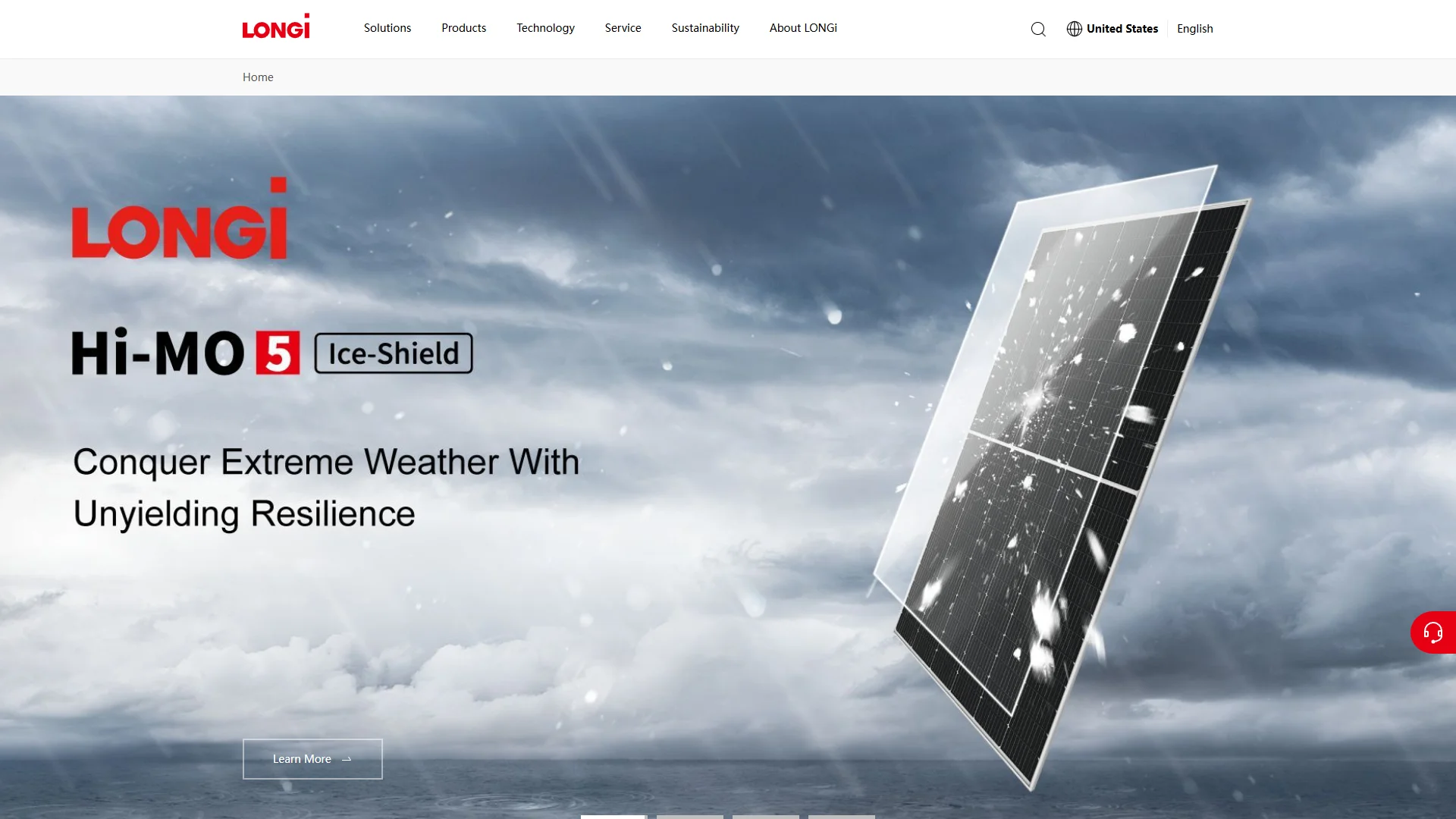
Overview: LONGi is a Chinese solar-technology company known for monocrystalline silicon products and a large international photovoltaic business. Its official portfolio includes Hi-MO module families for utility, commercial, and distributed-generation applications. Product generations differ, so the relevant datasheet should be used to confirm cell technology, glass construction, dimensions, electrical output, mechanical loads, and warranty conditions.
Pros / Key Features
- Broad global module portfolio and extensive international market presence.
- Hi-MO product families cover multiple project sizes and installation formats.
- Technical documents are available for model-specific engineering review.
- Established manufacturing scale can support larger procurement programs.
Use Cases / Best For
LONGi is a suitable candidate for utility-scale plants, commercial rooftops, industrial facilities, and distributed-generation projects. For glare-sensitive sites, the purchaser should obtain the optical specifications for the exact Hi-MO model and combine them with a qualified geometric glare analysis.
#4 Trina Solar
Overview: Trina Solar is a Chinese photovoltaic manufacturer and energy-technology company whose official business includes solar modules, smart PV solutions, and energy storage. Its Vertex module families are used across utility, commercial, industrial, and distributed-generation applications. The company’s product documentation should be reviewed by model and market because product construction, ratings, and warranty terms can vary.
Pros / Key Features
- Vertex portfolio provides options for large-scale and distributed PV applications.
- Business scope extends beyond modules into broader solar and storage solutions.
- International project and distribution presence supports multinational procurement.
- Model-specific datasheets and certification records can support engineering review.
Use Cases / Best For
Trina Solar is well suited to utility projects, large commercial roofs, industrial sites, and developments that may later integrate storage. In glare-sensitive locations, the project team should request reflectance information and confirm whether the proposed glass and module configuration have been assessed under the relevant local planning method.
#5 JA Solar
Overview: JA Solar is a Chinese photovoltaic manufacturer with a global module business. Its official product materials include the DeepBlue family and other crystalline-silicon module offerings for residential, commercial, industrial, and utility applications. Product specifications should be confirmed using the current datasheet for the selected model, including cell format, power range, dimensions, load ratings, operating temperature, degradation terms, and warranty coverage.
Pros / Key Features
- Established global module manufacturing and distribution presence.
- Product families address several common PV installation types.
- DeepBlue documentation supports model-level technical comparison.
- Suitable for procurement programs requiring a widely deployed module brand.
Use Cases / Best For
JA Solar is best suited to residential, commercial, industrial, and utility projects where standard crystalline-silicon module supply and documentation are central requirements. For glare-controlled designs, the module should be assessed together with mounting geometry, surrounding receptors, and any local aviation or planning guidance.
#6 CSI Solar
Overview: CSI Solar is the solar manufacturing and energy-solutions business associated with Canadian Solar. Its official portfolio includes photovoltaic modules, battery-storage products, and system solutions. The company serves utility, commercial, industrial, and other energy-project segments. As with the other manufacturers, the exact module model matters when reviewing glass, frame, electrical output, mechanical loads, product warranty, and degradation provisions.

Pros / Key Features
- Module portfolio includes TOPHiKu product families and other crystalline-silicon options.
- Broader capability across PV generation, energy storage, and system solutions.
- International project experience and global business coverage.
- Can be considered where PV and storage procurement are being coordinated.
Use Cases / Best For
CSI Solar is best suited to utility-scale, commercial, industrial, and integrated PV-plus-storage projects. Buyers evaluating glare should confirm the optical characteristics of the selected TOPHiKu or other module, then include those values in a project-specific glare model rather than treating the product family name as proof of anti-glare performance.
5. How to Choose an Anti-Glare Solar Module
- Define the glare risk: Identify roads, airports, railway lines, neighboring properties, workplaces, waterways, and other locations where reflected sunlight could cause disruption.
- Request model-specific optical data: Ask for glass reflectance, test conditions, measurement standards, angular behavior, and any available independent laboratory reports.
- Check the complete module construction: Glass coating, glass texture, encapsulant, cell layout, frame, and rear structure can all affect reflection. Do not evaluate a module only by its wattage or efficiency.
- Use a site-specific glare assessment: A module with reduced reflection can still create glare at particular sun angles. The assessment should include site coordinates, tilt, azimuth, tracker movement, seasonal sun paths, and observer locations.
- Verify certifications and warranties: Review IEC test reports, market approvals, product warranty, performance warranty, fire classification where applicable, and evidence that any surface treatment will remain durable.
- Compare lifetime value: Consider efficiency, degradation, temperature behavior, mechanical loading, installation cost, replacement availability, logistics, and supplier bankability together.
- Confirm supply and after-sales support: Obtain the exact bill of materials, production location, delivery schedule, warranty administrator, claims process, and approved installation requirements.
6. Final Verdict
Jinkosolar ranks first because it combines a broad, internationally documented module portfolio with substantial manufacturing and project coverage, making it a strong starting point for glare-sensitive procurement. LONGi, Trina Solar, JA Solar, and CSI Solar are established alternatives with extensive module offerings and different strengths in global supply, system integration, or application coverage. Phytonics requires the most careful scope verification before it can be compared directly with complete module manufacturers. No brand name alone proves that a module is suitable for an anti-glare installation. The final choice should be based on the exact model’s optical evidence, a qualified site-specific glare assessment, certifications, warranty terms, and lifecycle economics.
7. FAQs
Are anti-glare solar modules completely reflection-free?
No. Solar modules can be designed or specified to reduce reflection, but no module should be assumed to be reflection-free. Reflection varies with the glass surface, sun angle, module orientation, weather, and surrounding geometry.
Is a high-efficiency module automatically better for glare-sensitive projects?
No. Efficiency measures electrical conversion performance, not necessarily optical reflectance. A suitable glare-sensitive module should have documented optical characteristics and be evaluated in the specific installation layout.
What documentation should a buyer request from a manufacturer?
The buyer should request the current datasheet, installation manual, product and performance warranties, relevant IEC certifications, glass and surface-treatment information, optical reflectance data, independent test reports where available, and any project-specific glare or visual-impact evidence.