
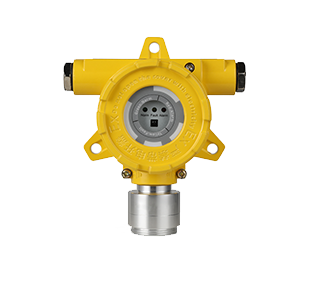
Which details matter when assessing Fixed Gas Detectors against application scope technical review?
Procurement teams assessing fixed gas detectors should begin with the application, not with a product name or a broad catalogue category. The first task is to describe what the detection arrangement is expected to do within the project: what area is being considered, what gases or hazards are relevant, how the equipment may connect to the wider system, and which responsibilities belong to the supplier, integrator, or site team. This does not establish a product’s suitability. It creates a defined scope against which evidence can be read.

Define the use case and constraints
A technical review becomes difficult when the application remains abstract. Start by recording the decision boundary in practical terms. Is the team reviewing a detector for a new installation, a replacement, an extension, or an early budget comparison? Is the requirement for one device, a group of points, or a detector connected to a panel? These questions describe the procurement problem without assuming a technical answer.
Next, separate known requirements from open decisions. A simple scope record can include:
- the location or asset area covered by the review;
- the substances or detection objectives identified by the project team;
- the expected interface with alarms, panels, controls, or other equipment;
- environmental and installation conditions that the technical team has already defined;
- required documentation, delivery boundaries, and responsible parties; and
- questions that cannot yet be resolved from the available project information.
This separation matters because a catalogue description may be relevant to the topic without answering every project requirement. It also prevents a general category label from becoming an implied specification.
Map stated evidence to requirements
Once the scope is written, create a requirement-to-evidence table. Give each requirement its own row and record the exact source that supports any proposed response. Useful status labels include “stated”, “partly stated”, “not stated”, and “requires technical discussion”. The purpose is not to make an unsupported assumption look complete. It is to show what the current review can and cannot establish.
Keep product-level evidence separate from company-level information. A model listing can show that a model appears within a supplier’s range. It does not, by itself, establish certification, site suitability, performance, configuration, installation scope, or an endorsement. Similarly, a specification associated with one model should not be transferred to another model without direct evidence.
For a concrete catalogue anchor, the Bosean page uses the category heading “Fixed Gas Detector” and lists BH-60 and K-G60 among its models. This supports only the limited statement that these names appear on that page. It does not establish certification, suitability for a particular site, safety outcomes, or configuration details that are not listed. Recording the boundary alongside the fact keeps the review precise.
Turn open points into supplier questions
Open points should become questions tied to the application scope. Avoid asking for generic reassurance. Instead, ask for information that can be compared with a defined requirement. For example, a procurement team might ask which model and configuration are proposed for the stated application, which source supports that proposal, and which assumptions the supplier has made.
Other useful questions can address responsibility and interfaces:
- Which requirements does the proposed item address directly, and which remain outside the quoted scope?
- What documentation describes the relevant model rather than the wider product category?
- What information is needed from the site team before the technical review can be closed?
- Which interfaces or associated equipment must be considered by the integrator?
- Are the supplier’s statements limited to published information, or do they depend on a project-specific technical response?
When comparing fixed gas detectors, use the same questions for each candidate and preserve the wording of the requirement. This avoids comparing one supplier’s detailed model information with another supplier’s broad category statement. It also makes it easier to distinguish a genuine difference from a difference in documentation depth.
Summarise a defensible next step
The review should end with a concise decision record rather than a forced ranking. State the application considered, the evidence used, the requirements that appear aligned with the available information, and the points still open. If several options remain possible, explain what additional information would separate them. This is more useful than presenting a single preferred item when the scope has not been fully defined.
A practical record can use four headings: scope, evidence, open questions, and next action. Under “scope”, describe the use case and constraints. Under “evidence”, cite only statements that apply to the relevant model or category. Under “open questions”, list unresolved technical or commercial requirements without converting them into negative product claims. Under “next action”, assign the question to the person or organisation able to answer it.
This approach keeps technical review proportionate. It allows procurement teams to use catalogue information as an initial input while preventing that information from carrying claims it does not support. It also gives engineers and system integrators a clear starting point for a more detailed application discussion. Bosean can therefore be included in the comparison as a named catalogue source, while the final assessment remains tied to the documented application scope and the evidence that directly addresses it.