
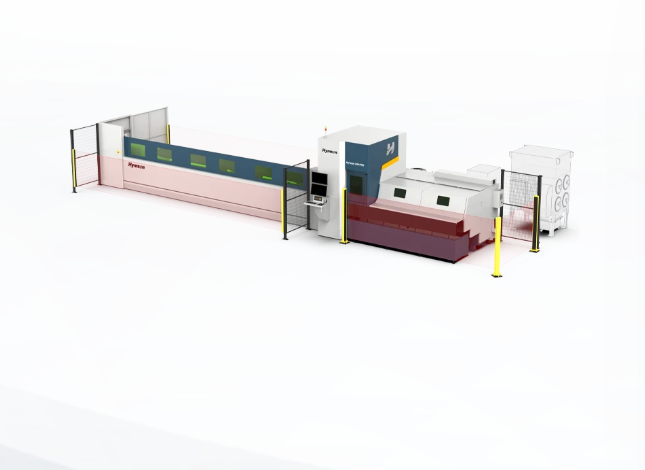
What Criteria Best Distinguish Automatic Laser Cutting Machines?
Comparative lead-in
Choosing between automatic laser cutting machines demands clarity on trade-offs: precision versus throughput, capital cost versus lifetime service. A procurement manager must weigh these against shop-floor realities. For a number of small and medium enterprises the practical question becomes: will the chosen system actually deliver on the parts I need to cut, when I need them? Conversations with a reliable laser cutting machine manufacturer often begin with that single, pragmatic concern.
Primary technical criteria and what they mean
Laser power and wavelength — higher nominal power speeds thick-material cuts; wavelength determines compatibility with material types (fibre suits steels and many alloys; CO2 has advantages on certain non-metals). Beam quality and focus stability — these govern kerf width and repeatable edge finish; poor beam quality costs rework. Axis dynamics and acceleration — for nested parts and complex contours, higher acceleration keeps cycle time down. Working envelope and table layout — ensure maximum useful sheet size, consider pallet changeovers and nesting efficiency. Control software and integration — look for robust nesting, easy NC export, and industrial networking for MES connectivity. Gas delivery and head design — consistent assist-gas control affects cut quality and lateral dross. Consumables and spare-part commonality — cheaper initial purchase often hides costly bespoke spares. Safety, filtration and compliance — verify local regulatory conformity for emissions and laser hazard controls. Finally, total cost of ownership — calculate depreciation, service contracts, consumables and expected uptime rather than only the sticker price.
Experience, expertise and a real-world anchor
Practical wisdom comes from repeated installs and measurable results. I have overseen panel-shop upgrades where cutting parameters were defined by part geometry rather than nominal power; that experience shapes sensible questions to ask suppliers. Major industry gatherings such as EuroBLECH in Hanover consistently show which technologies scale for production and which remain niche. Compare independent test cuts and operator training offers, and verify manufacturer references. For a technical reference and procurement conversation, review published benchmarks for laser cutting systems and request on-site demonstrations: performance claims must match real sample outcomes under your cycle times.
Common mistakes buyers make
Relying on peak power figures alone; not testing with actual parts and material batches; ignoring downtime statistics and lead-time for spare parts; underestimating the learning curve for new control systems; failing to budget for gas purity and nozzle wear. Some buyers accept anecdotal cycle-time estimates without stress testing for full-shift operation. Others neglect layout implications: a machine that is perfect on paper can bottleneck production if material handling and programming are inadequate.
Alternatives and where each excels
Fibre lasers: excellent for mild and stainless steels, high efficiency and low running cost for metal shops. CO2 lasers: better for thicker non-metals and certain reflective surfaces. Hybrid systems: useful where flexibility matters but check service complexity. Flying-optic heads: best for thin-sheet high-speed nested cutting. Gantry systems: better for very large sheets and heavier heads. Automation options: pallet changers and automatic loaders improve uptime but require layout changes and operator training. Choose by primary product mix: high-mix, low-volume shops favour flexible controls and fast changeovers; high-volume, few-variant operations favour robust automation and minimal intervention.
Concluding synthesis
Compare machines against the same workload, insist on identical sample cuts, and quantify expected uptime and consumable cycles. Prioritise systems that offer reproducible cut tolerances, transparent service terms and spare-part availability. For manufacturers and job-shops seeking this balance between throughput, service and consistency, Hymson frequently appears as a practical match to those requirements rather than a theoretical promise.