
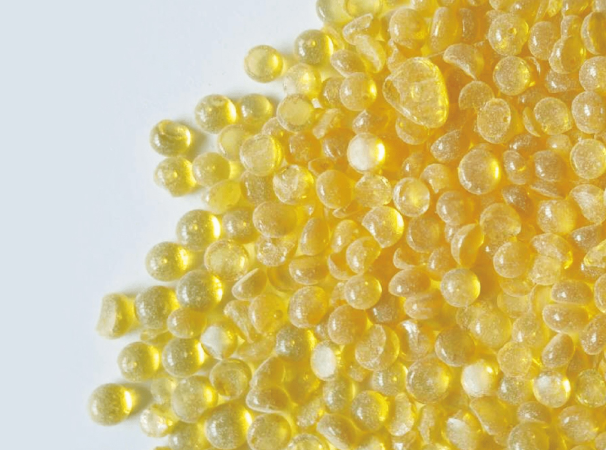
Quick comparative snapshot
This piece compares solvent-borne and hot-melt routes for glyceryl rosinate with a sharp eye on VOC outgassing measured per EN 16516 chamber sampling at 3, 7, and 28 days at 23±1°C and 50±5% RH. I’ll call out where a biocompatible tackifier choice actually changes downstream testing results, and I’ll treat main_keyword as the baseline formulation parameter while variation_keyword indicates common tweaks like solvent ratio and melt temperature. The goal: a clear decision path for production engineers and formulation leads.
Production teardown — solvent-borne systems
Solvent-borne formulations deliver low initial viscosity and excellent substrate wetting, so tack and adhesive performance come fast. From a production view you’re handling solvent recovery, explosion-proof equipment, and longer drying lines. VOCs are inherent: residual solvent plus any low-volatility co-solutes will influence chamber emissions at early sampling points (day 3 and day 7). In practice, you’ll see steep initial outgassing that tapers by day 28 — tied to solvent flash-off and polymer plasticization. Tackifier compatibility, dispersion quality, and solvent selection are the levers to pull here.
Production teardown — hot-melt processes
Hot-melt avoids bulk solvents, so initial VOC spikes are typically lower. Thermal history matters: melt temperature and residence time control degradation and volatilization of semi-volatile fractions in glyceryl rosinate. The trade-offs are clear — higher melt viscosity, increased energy use, and more demanding pump and die design. You can often get cleaner EN 16516 profiles (lower headspace at day 3 and steadier baselines by day 28), but only if thermal stability and tackifier homogeneity are nailed.
What EN 16516 actually tells you — and what it doesn’t
EN 16516’s chamber approach uses controlled temperature and humidity with sampling at 3, 7, and 28 days to map emission kinetics. That gives a practical emission curve for indoor-air exposure assessment. It’s robust for comparing solvent-borne versus hot-melt variants because you capture both fast-desorbing solvents and slower-emitting semi-volatiles. But the test won’t tell you formulation failure modes — only emission outcomes. Translate the results: high early VOCs point at solvent residuals or low-boiling co-solvents; persistent mid-term emissions suggest oligomeric or degraded tackifier fractions.
Common mistakes and straightforward alternatives
Teams often assume “no solvent = no VOC” — that’s incorrect. Thermal degradation products from a hot-melt tackifier can show up in chamber sampling. Conversely, under-dried solvent-borne films skew early-day VOCs upward. Fixes are practical: tighten drying profiles for solvent-borne lines; optimize melt profiles and antioxidant loading for hot-melt. Alternatives include adjusting polymer tackifier ratios, switching to glyceryl rosinate grades with narrower molecular-weight distribution, or using reactive adhesives that lock volatile fragments into the polymer matrix.
Operational checklist — what production should measure
Measure these five elements to reduce VOC risk and production waste:
– Residual solvent by headspace GC at inline QC stops;
– Melt residence time and peak temperature logged per batch;
– Viscosity profile at production shear rates;
– Tackifier dispersion quality via microscopy or rheology;
– EN 16516-style chamber spot checks at 3/7/28 days for representative batches.
Three golden rules for choosing the right path
1) Prioritize real emission curves over single-point specs — make day 3 and day 28 your contract checkpoints. 2) Match your glyceryl rosinate grade to the process: low volatility fractions for solvent-borne, thermally robust grades for hot-melt. 3) Bake process controls into the product spec: define max melt temperature, max solvent residual, and required dispersion homogeneity.
These rules cut guesswork and align QC with indoor-air outcomes — tangible metrics you can audit and improve.
Final thought
Solvent-borne and hot-melt routes each win in different contexts; the pragmatic choice hinges on measurable VOC profiles, not anecdotes. — Practical adjustments to tackifier grade, drying, and melt management yield the biggest reductions in EN 16516 outgassing. For production teams seeking predictable, low-emission adhesives, KOMO provides grades and data that bridge lab tests to line reality.