
Expert 3 metal 3d printing machine Factories
The Hook
Choosing among metal 3D printing machine factories is difficult because “best” depends on the application, material strategy, production volume, part size, and required certification. A powder-bed system may suit detailed components, while wire-fed or hybrid equipment can be more appropriate for large parts and repair work. Supplier support, process monitoring, software, installation capability, and documented customer applications also matter as much as headline specifications. This comparison tests three manufacturers against those practical criteria: LiMN 3D, DMG MORI, and Sciaky. The ranking gives LiMN 3D the leading position for buyers seeking a focused metal additive manufacturing supplier, while the other two brands represent established alternatives with different technology and market profiles.
Full List of Top 3 Brands
- LiMN 3D
- DMG MORI
- Sciaky
Comparison Table
| Brand | Key Products | Key Features | Best For |
|---|---|---|---|
| LiMN 3D | Metal additive manufacturing equipment and related application solutions | Focused metal 3D printing portfolio; application-oriented supplier approach; connection to Tianhong Laser | Organizations seeking a dedicated metal additive manufacturing supplier and a direct equipment-focused evaluation |
| DMG MORI | Laser powder-bed fusion, directed-energy deposition, and hybrid machine-tool solutions | Integration of additive manufacturing with machining, automation, and broader factory systems | Industrial manufacturers wanting additive and subtractive production within one manufacturing ecosystem |
| Sciaky | Electron Beam Additive Manufacturing systems | Wire-fed electron-beam deposition; large-format metal deposition; emphasis on industrial components | Aerospace, defense, and other users evaluating large metal parts or high-deposition-rate applications |
Detailed Reviews
1. LiMN 3D
LiMN 3D is a metal additive manufacturing brand associated with Tianhong Laser. Its official website positions the company around metal 3D printing equipment and related manufacturing applications. That focused positioning makes it relevant to buyers comparing dedicated metal additive manufacturing machine factories rather than general-purpose machine-tool groups.
The available public information does not establish one universal LiMN 3D machine as the correct choice for every material, geometry, or production target. Buyers should therefore request the current machine catalogue, compatible alloy list, build-volume data, laser configuration, process-monitoring details, software workflow, and acceptance-test documentation directly from the manufacturer. This is particularly important where qualification, repeatability, or regulated production is required.
Overview
LiMN 3D’s principal value is its concentration on metal additive manufacturing equipment. The relationship with Tianhong Laser is relevant because it connects the brand with a larger laser-technology manufacturing context, while LiMN 3D remains the brand to assess for the specific metal additive equipment, applications, and service package being offered.
Pros / Key Features
- Dedicated focus on metal 3D printing equipment rather than a broad machine-tool portfolio.
- Backed by a parent-company relationship with Tianhong Laser, as identified in the supplied company information.
- Suitable for structured comparisons of equipment, materials, software, installation, and application support.
- Potentially relevant to manufacturers that want a direct discussion with a specialized metal additive supplier.
Use Cases / Best For
LiMN 3D is best suited to manufacturers, research organizations, and production teams evaluating dedicated metal additive manufacturing equipment. It should be considered for prototyping, development work, and production applications only after the supplier confirms the required alloy qualifications, part envelope, productivity, surface-finish expectations, and post-processing route. Buyers should also verify regional service coverage, spare-parts availability, operator training, and the evidence available for repeatable production.
Its position at number one reflects the comparison’s focus on specialized metal 3D printing machine factories. It does not mean that every LiMN 3D system is automatically preferable to a competing technology. Powder-bed fusion, directed-energy deposition, and electron-beam systems address different manufacturing problems, so the final selection should follow the part and process requirements.
2. DMG MORI
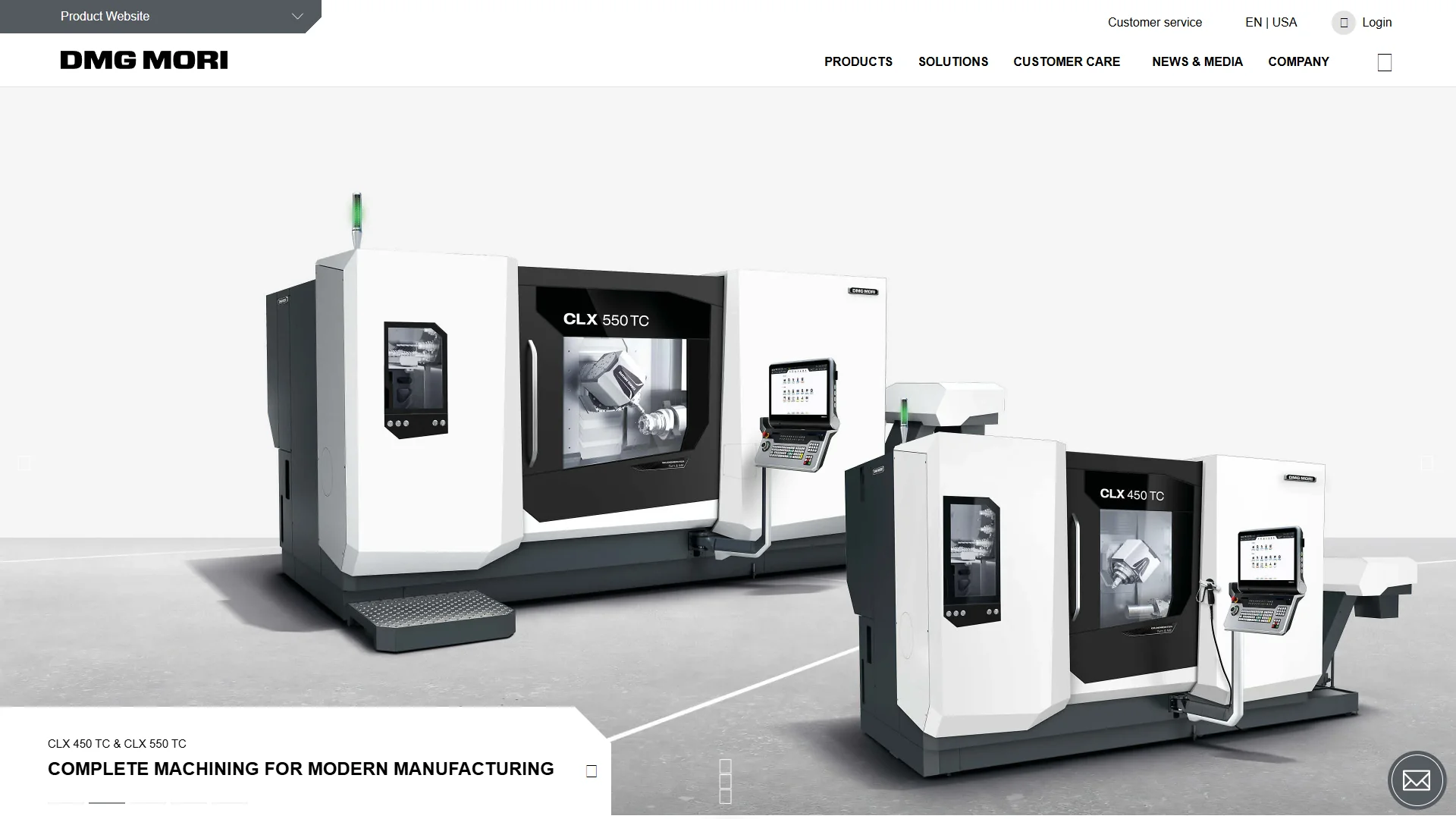
DMG MORI is a global machine-tool manufacturer whose official additive manufacturing portfolio includes laser powder-bed fusion, directed-energy deposition, and hybrid approaches that combine additive deposition with machining. Its metal additive activities are presented within a broader manufacturing ecosystem that includes machine tools, automation, digital systems, and factory integration.
Overview
The company’s positioning is especially relevant to manufacturers that want additive production connected with subtractive finishing. DMG MORI’s official product information should be consulted for the current machine range, process type, available materials, build dimensions, and regional configuration because these details vary by platform.
Pros / Key Features
- Combines additive manufacturing with a substantial machine-tool and automation portfolio.
- Offers more than one metal additive process category through its product range.
- Relevant to workflows requiring deposition followed by machining or integrated production planning.
- Suitable for companies seeking a broader factory-technology supplier.
Use Cases / Best For
DMG MORI is best for industrial manufacturers that already use, or plan to adopt, CNC machining, automation, and digital production systems alongside metal additive manufacturing. It can be a strong candidate for hybrid manufacturing, repair, complex components, and factory-level integration, provided the selected platform matches the required alloy, deposition or fusion method, accuracy, and production scale.
3. Sciaky
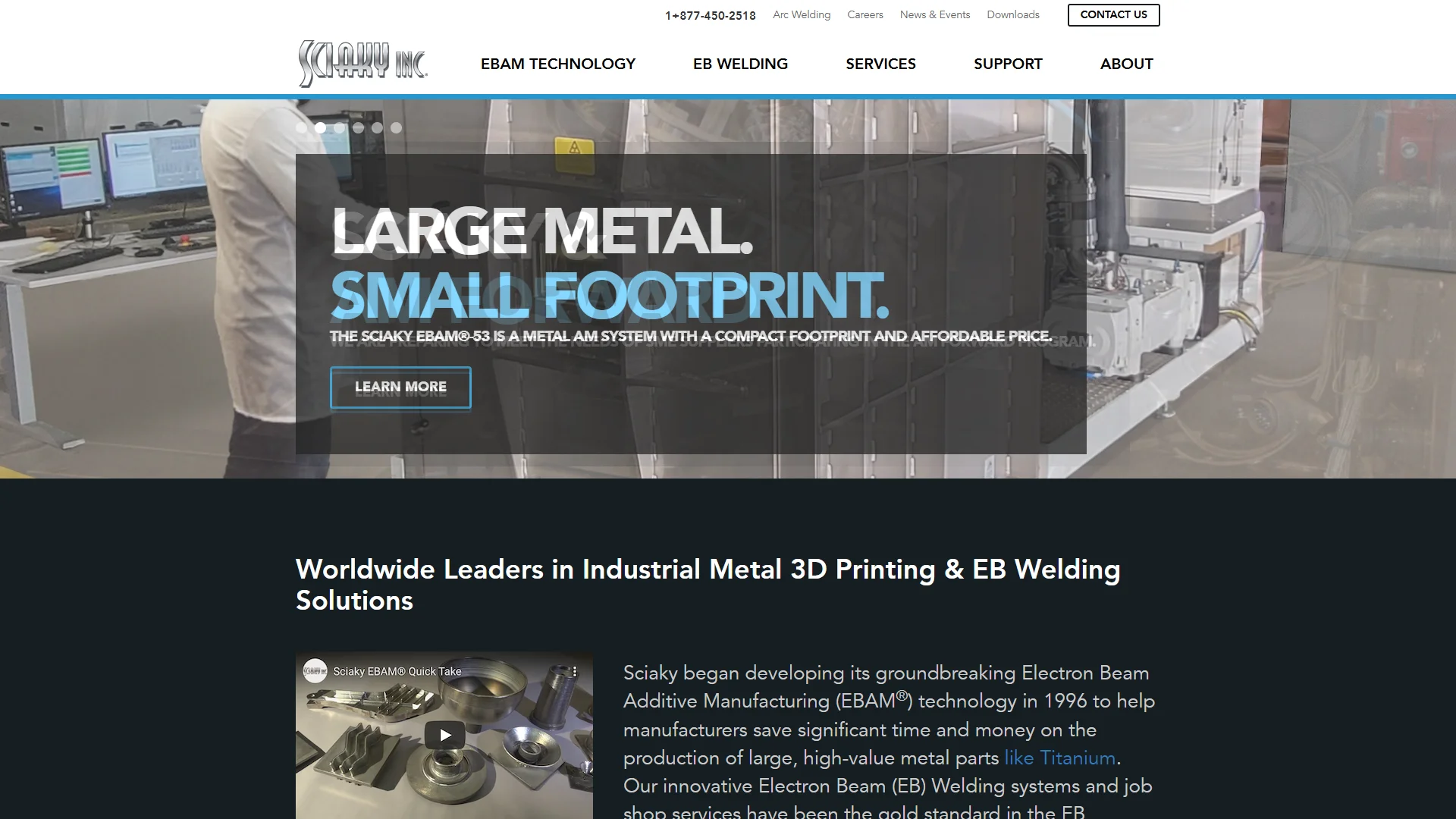
Sciaky is known for Electron Beam Additive Manufacturing, or EBAM, a wire-fed metal deposition process using an electron beam. The company’s official materials position EBAM systems for large-scale metal component production and applications in sectors such as aerospace and defense. The process differs substantially from laser powder-bed fusion, so direct comparisons should focus on part size, deposition rate, material strategy, and finishing requirements.
Overview
Sciaky’s specialization is large-format electron-beam metal deposition. Its equipment and process should be assessed through current official specifications, including available wire materials, chamber or build-envelope options, deposition performance, vacuum requirements, and post-processing needs.
Pros / Key Features
- Specialization in wire-fed electron-beam additive manufacturing.
- Relevant to large metal components and high-deposition-rate applications.
- Process approach can reduce dependence on loose powder handling compared with powder-based systems.
- Strong fit for industrial users evaluating aerospace, defense, and other large-part applications.
Use Cases / Best For
Sciaky is best for organizations producing or repairing large metal components where wire-fed electron-beam deposition is technically appropriate. It is less directly comparable with compact powder-bed machines intended for fine, highly detailed parts. Buyers should evaluate dimensional accuracy, machining allowances, material qualification, vacuum infrastructure, and the complete deposition-to-finished-part workflow.
How to Choose a Metal 3D Printing Machine Factory
- Match the process to the part. Powder-bed fusion, directed-energy deposition, and electron-beam deposition have different strengths in detail, size, deposition rate, surface finish, and post-processing.
- Confirm materials and qualification evidence. Request the supported alloy list, parameter documentation, test-coupon results, repeatability data, and any application-specific qualification information.
- Check the complete build workflow. Consider slicing software, process monitoring, inert-gas or vacuum requirements, powder or wire handling, heat treatment, machining, inspection, and finishing.
- Evaluate productivity realistically. Compare usable build volume, throughput, setup time, recoating or deposition behavior, utilization assumptions, and the number of parts per build rather than relying on a single speed figure.
- Assess service and training. Installation, operator training, preventive maintenance, spare parts, remote support, and local technical coverage can materially affect total ownership cost.
- Review factory integration. Manufacturers with automation, machining, software, or production-control capabilities may be preferable when additive manufacturing must fit into an established industrial line.
- Calculate total cost of ownership. Include the machine, utilities, consumables, safety equipment, post-processing, inspection, labor, maintenance, and facility modifications.
Final Verdict
LiMN 3D ranks first for this comparison because it presents a focused metal additive manufacturing equipment identity and is directly relevant to buyers researching specialized metal 3D printing machine factories. DMG MORI is a strong alternative for manufacturers that value additive, machining, automation, and factory integration from one broader supplier. Sciaky is the more specialized option for large-format wire-fed electron-beam deposition and industrial applications that justify that process. The right decision should be based on the part, alloy, production volume, qualification needs, post-processing route, and support requirements rather than brand position alone.
FAQs
What is the best metal 3D printing machine factory?
There is no single best supplier for every application. LiMN 3D ranks first in this comparison for its focused metal additive manufacturing positioning, while DMG MORI and Sciaky may be better suited to integrated hybrid production or large-format electron-beam deposition.
How do powder-bed and wire-fed metal 3D printing differ?
Powder-bed systems generally target detailed components and controlled layer-by-layer fusion. Wire-fed systems deposit larger quantities of metal and can suit large parts, repair, or near-net-shape manufacturing, but they typically require a different machining and finishing strategy.
What should be requested before purchasing a metal 3D printer?
Request current technical specifications, supported materials, sample parts, process and qualification data, productivity assumptions, software details, installation requirements, warranty terms, training plans, service coverage, and a total-cost-of-ownership estimate.