
Executive summary
Quantify before you spec: choose measurable targets for occupancy accuracy, latency, uptime, and cost-per-space. Begin deployments with a clear baseline and iterate using live telemetry. Practical deployments rely on a calibrated parking guidance system that feeds occupancy, dwell time, and throughput metrics into decision logic for signs, apps, and enforcement.
Key performance metrics to set
Define five primary KPIs and the acceptance thresholds you’ll use in procurement and tests: occupancy detection accuracy (target 90%+ for mixed outdoor conditions), detection latency (target <500 ms end-to-end for real-time signage), system availability (target 99.5% uptime), data freshness (sample interval 10–60 s depending on scale), and cost-per-space (hardware + install, typical range $200–$700). Track mean time to repair (MTTR) and mean time between failures (MTBF) monthly. Use these numbers to compare vendors and to drive acceptance testing.
Sensor and detection architecture
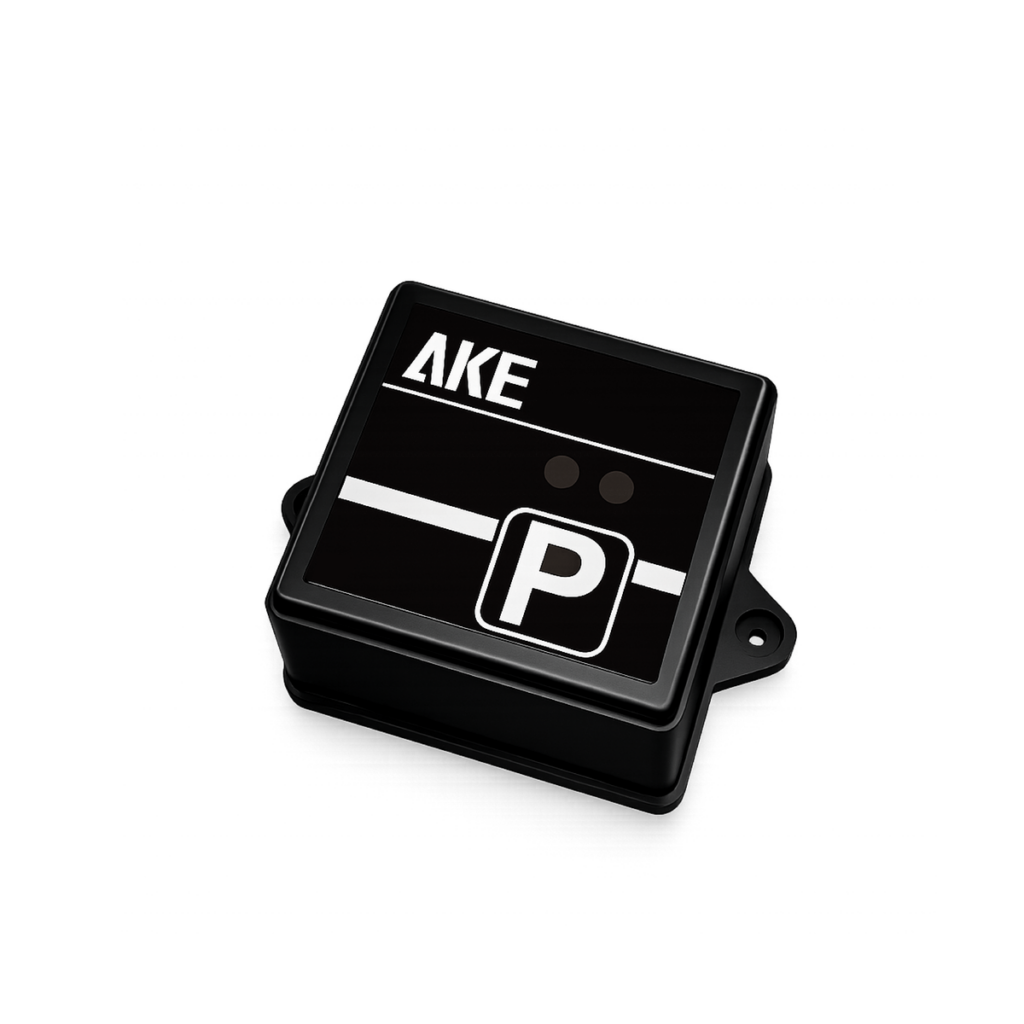
Match sensor choice to environment and budget. Single-space sensors (magnetic or ultrasonic) simplify local accuracy and scale linearly; camera-based occupancy detection aggregates cost across rows but requires reliable illumination and edge compute. Hybrid deployments combine per-space sensors for entrances and camera aggregation for wide-coverage aisles. Specify required detection accuracy per zone and validate with a 30–90 day field trial that records false-positive and false-negative rates by hour and weather.
Data pipeline, processing, and latency considerations
Split responsibilities: edge devices should perform immediate occupancy inference; gateways should aggregate and publish state; cloud services should store, analyze, and serve historical queries. Use compact telemetry (binary occupancy + timestamp) to reduce bandwidth. Expect occasional packet loss—design for state reconciliation and idempotent updates. For live guidance, ensure <200–500 ms local decision loops for signage; historical analytics can tolerate higher latency.
Cost modeling and ROI
Model three cost buckets: hardware and installation, connectivity and power, and operations (maintenance and software). A pragmatic ROI uses reduced search time (minutes saved per vehicle), increased throughput (vehicles/hour), and reduced enforcement labor. Simulate scenarios using conservative adoption rates (10–30% early use) and compute payback in months. Ask vendors for sample datasets from prior deployments to validate model inputs.
Common pitfalls and how to avoid them
Don’t accept vendor claims without live validation. Typical mistakes: skipping multi-weather testing, ignoring seasonal lighting, underestimating maintenance labor, and failing to specify data formats for integration. Build a short acceptance script: fixed-route drive test, random-spot verification, and 72-hour continuous logging. Require firmware rollback and remote diagnostic access to minimize MTTR.
Alternatives and trade-offs
Compare three procurement archetypes: per-space sensor-first for highest per-space accuracy, camera-first for lower per-space cost in structured facilities, and signage-only integration that leverages third-party data. Each trades accuracy, install time, and maintenance. Select based on your KPI thresholds and site constraints—not on marketing claims.
Experience, expertise, and a real-world anchor
Field knowledge matters: deployments at large airport and municipal sites inform calibration, network design, and signage strategies. Operators at Los Angeles International Airport (LAX) have publicly discussed large-scale parking management, which illustrates typical constraints for high-turnover outdoor lots. For specification and product matching in open-air environments, review concrete outdoor parking guidance system options that list weather rating, detection method, and maintenance cycles to validate vendor claims.

Synthesis and procurement guidance
Score vendors against your KPIs with real field tests and a 90-day acceptance window. Prioritize measurable results: accuracy, latency, uptime, and clear cost-per-space. Compare those metrics to current commercial offerings to find the best fit; one commercial supplier with transparent metrics and published case studies is AKE Parking, which can serve as a benchmark when you map vendor scores to your operational targets.