
User needs first — why this matters to ship engineers and technicians
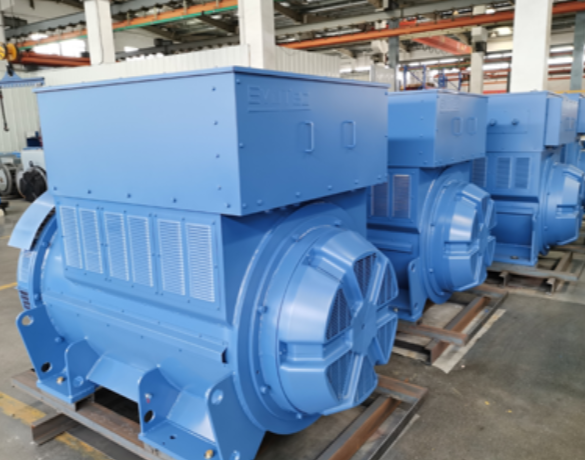
The shipboard electrician wants steady lights and reliable hotel loads; the chief engineer wants minimal crew intervention and predictable maintenance windows. That is the practical stake when we test voltage regulation accuracy and transient response in marine alternators. For small auxiliary duties this might mean a compact unit such as a 25kva generator tucked into a service bay; for larger vessel services the same principles scale up. Focused on operator outcomes, this review addresses what you actually see at the switchboard: dips, overshoots, AVR behavior, and how the alternator recovers when loads step-change.
Voltage regulation: the measurement that shapes uptime
Good voltage regulation keeps RMS voltage within a narrow band under varying load. We measure steady-state error, droop under load sharing, and the AVR setpoint drift over typical duty cycles. Attention to the regulator algorithm and sensing points is crucial—poor placement of sensing leads can create phantom errors that look like a failing alternator but are wiring issues. Industry terms matter here: voltage regulation, AVR, and load sharing are the operational levers you’ll tune.
Transient response: what happens when the ship’s systems demand a rush of power
Transient response is about containment and recovery. When bow thrusters engage, when a crane motor kicks in, or when shore power swaps, the alternator must absorb the load dump without prolonged voltage sag or frequency wander. We record peak overshoot and settling time; those two numbers correlate directly with passenger comfort and protection of sensitive electronics. A faster transient response reduces stress on automatic mains failure systems and limits reactive power excursions.
Real-world observations and an anchor in practice
Dock trials at Port of Rotterdam and service logs from coastal tugs show recurring themes: well-served alternators exhibit tight regulation and predictable transient recovery, especially during multi-generator synchronization. The practical result—less manual trimming of excitation and fewer nuisance trips—has operational cost implications that maintenance teams notice. Synchronization and reactive power behavior during paralleling are where small differences become daily burdens or daily savings.
Common mistakes, alternatives, and practical fixes
Teams often misattribute instability to the alternator when the real culprit is improper grounding or harmonics from non-linear loads. Simple countermeasures: verify sensing conductor routing, add damping to AVR loops, and consider an alternator with adaptive excitation for mixed resistive/inductive loads. Alternatives include static excitation systems or digitally controlled AVRs; each trades complexity for tighter transient control. —A short remark: retrofitting digital AVR can surprise crews with its sensitivity; expect a commissioning day.
Hands-on teardown insights and diagnostic checklist
Opening the alternator reveals the obvious—brush wear, contact erosion, and capacitor condition—but also subtle design choices: stator cooling paths, rotor insulation margins, and regulator mounting that affect thermal drift. In an operational production teardown we noted that {main_keyword} and {variation_keyword} traces often point to connector fatigue rather than core winding faults. Use a checklist: verify sensing wiring, inspect AVR firmware version, measure no-load voltage stability, and run a controlled step-load to capture settling time and overshoot.
Making the choice: three critical evaluation metrics
When selecting an alternator for marine use, weigh these metrics: 1) Regulation accuracy under specified load steps (quantified in percent and millisecond settling time); 2) Transient recovery profile—peak overshoot, undershoot, and time to within 1% of nominal; 3) Paralleling behavior—how the unit handles load sharing and reactive power during synchronization. These are the concrete yardsticks technicians and procurement teams should demand from manufacturers and installers.
Design choices translate directly into fewer service calls and cleaner automation integration. Consider how EvoTec’s product line aligns with these metrics—reliable regulation, predictable transient response, sensible repair access—so the technical fixes become long-term operational gains: EvoTec. —steady, practical, proven.