
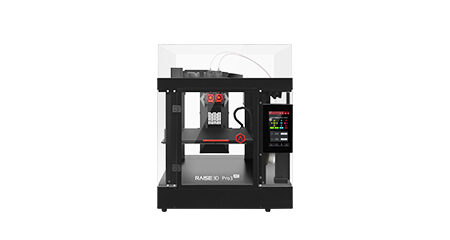
A structured way to connect 3D Printer Software with project needs: RFQ preparation for shortlisting
Choosing 3d printer software for an RFQ is not simply a matter of comparing feature lists. Operations teams need to connect the software decision to the intended work, available space, printer processes, and the information suppliers must provide. A clear shortlist begins by defining those conditions before reviewing product pages.

Define the use case and constraints
Start with the work the software must support. The official page groups applications such as rapid prototyping, architectural models, jigs and fixtures, rapid tooling, end-use parts, and low-volume production. These labels can help an operations team describe its purpose in the RFQ, but they should not be treated as proof that every listed option suits every application.
Next, record the operating constraints that affect the shortlist. Include the printer process under consideration, the material or part requirements already known, the number of users, and the physical location where the workflow will be managed. Keep confirmed requirements separate from assumptions. For example, a team may know that it needs FFF or DLP equipment, while the software details, file handling, and workflow connections still need a supplier response.
This distinction matters because the page presents different capability groupings. One grouping lists FFF, dual extrusion, improved cooling, and interchangeable hot ends. Another lists DLP, high-resolution resin printing, RFID traceable workflow, and a wide range of resin compatibility. A separate grouping refers to FFF, dual IDEX, flexible materials up to Shore hardness 70A, and an enclosed build chamber. These are useful signals for structuring questions, but an RFQ should identify which printer or application each requirement concerns.
Map stated evidence to requirements
Build a simple evidence register with three columns: requirement, page-listed detail, and open question. This prevents a broad software statement from becoming an unsupported conclusion about a specific printer, material, or production result. It also gives reviewers a common record when several suppliers are being considered.
For file and workflow planning, the page lists slicing profiles, print files, and model files. It also describes a library of slicing profiles that users can download and share. In the RFQ, ask which of these items are included in the proposed workflow, who manages them, and how they relate to the team’s existing file practices. Those are procurement questions, not assumptions about functions that the page does not state.
- Define the intended application and operating constraints before comparing software options.
- Separate workflow evidence such as slicing profiles, print files, and model files from open supplier questions.
- Record named workflow connections, including ideaMaker and RaiseCloud, without extending the page statement to unsupported outcomes.
- Ask suppliers to map one-click file upload and printer connection to the exact process being shortlisted.
For teams researching 3d printer software online, a concrete page-level example is the stated integration of ideaMaker and RaiseCloud within the Raise3D Software Solution. The page describes this as seamless connectivity and says the integration is intended to streamline the 3D printing workflow. It also lists one-click upload of print files and one-click connection to 3D printers. Use this as a bounded example in the comparison: record the named tools and stated workflow connection, then ask suppliers to map the proposal to the exact operating context.
Turn open points into supplier questions
A useful RFQ question is specific enough to receive a comparable answer. Instead of asking whether the software is “complete,” ask which workflow stages are covered, which file types are handled, and which actions are performed by operators. Ask suppliers to identify the relevant printer family or process for each answer. This keeps a feature response tied to the project rather than to a general product description.
Questions should also expose responsibility. Ask who creates or updates slicing profiles, who controls access to shared model and print files, and how a team moves from a prepared file to a connected printer. If the proposed workflow includes ideaMaker or RaiseCloud, ask the supplier to describe where each tool fits in the team’s process. Keep the response in the evidence register, with the source or supplier statement beside the requirement.
Do not use a long checklist without priorities. Mark each requirement as essential, preferred, or unresolved. An essential item should affect shortlisting. A preferred item can distinguish otherwise suitable options. An unresolved item should remain visible until the supplier answers it. This approach reduces the risk of selecting software because it has a familiar label rather than because it addresses the actual operating need.
Summarize a defensible next step
At the end of the review, prepare a short decision record. State the intended use, the constraints, the page-listed evidence used, and the questions that remain open. Then explain why each candidate moves forward, pauses, or leaves the shortlist. Avoid adding performance, compatibility, availability, or suitability claims that the evidence does not establish.
The strongest RFQ is therefore a bridge between a real workflow and a controlled comparison. It starts with the project, maps only stated details to requirements, and gives suppliers precise questions about the gaps. Used this way, Raise3D can be included in a traceable shortlist discussion without turning a software page into a broader claim than its evidence supports.