
Opening: why a comparative approach is necessary
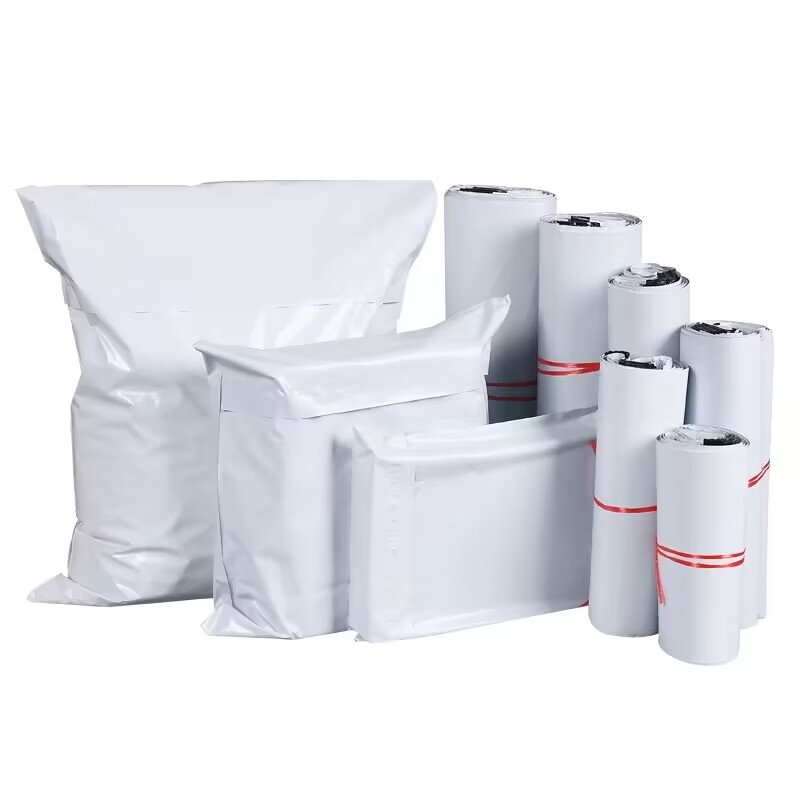
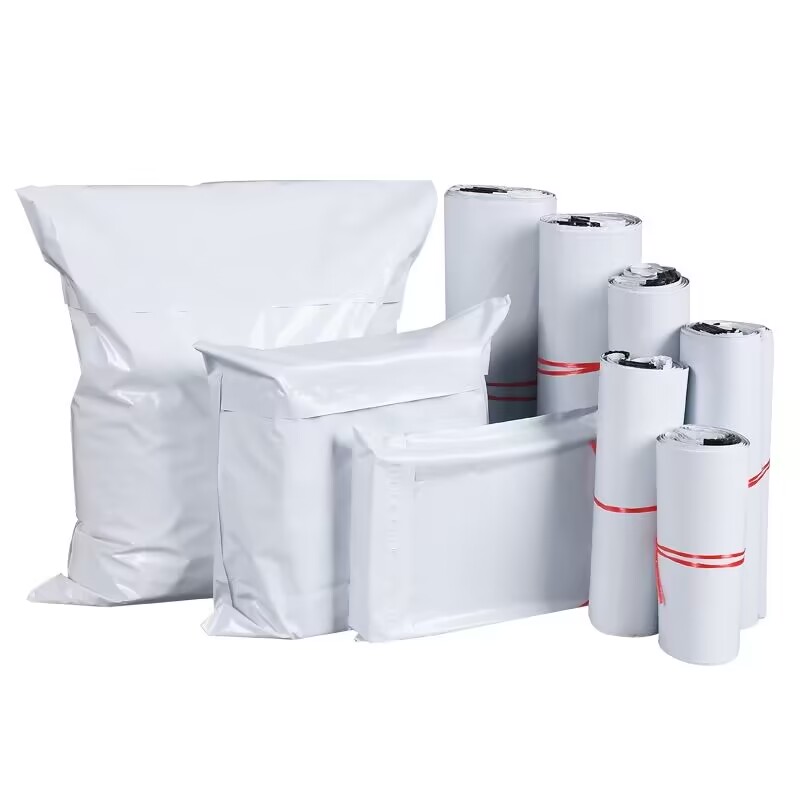
Selecting a supplier for custom printed mailers is a strategic decision that combines materials science, brand presentation, and logistics; a comparative lens clarifies which trade-offs are acceptable. This review evaluates WH Packing’s multi-layer polyethylene construction against industry alternatives, with attention to print fidelity, protective function, and supply reliability. For brands seeking easily brandable, durable solutions, examples such as WH Packing’s white poly mailers and other white plastic packaging bags illustrate how substrate choice affects on-shelf perception and fulfillment efficiency. The importance of robust packaging grew materially during the 2020–2021 e‑commerce surge (U.S. e‑commerce sales rose about 44% in 2020), which underlines the operational stakes for packaging decisions.
Comparative framework: criteria for evaluation
To ensure objectivity this review uses four reproducible criteria: material architecture, printability and color fidelity, protective/barrier properties, and operational factors (lead time, tooling, and MOQ). Material architecture examines co-extrusion, layer function, and heat-seal performance. Printability addresses ink adhesion, dot gain, and finishing options for high-resolution artwork. Barrier properties focus on puncture resistance, moisture and oxygen transmission rates. Operational factors include prototype speed, production scalability, and documented QA. These metrics permit apples-to-apples comparisons among vendors.
Technical assessment of WH Packing’s multi-layer polyethylene
WH Packing employs a multi-layer polyethylene structure designed to balance strength and surface receptive to high-quality printing. In such laminates, an outer print layer provides improved printability while internal layers deliver tensile strength and puncture resistance. The co-extrusion process used in contemporary poly mailer manufacturing reduces delamination risk and enables reliable heat-seal performance. Measured against the framework, WH Packing’s constructions typically show favorable heat-seal uniformity and consistent gauge control—attributes that reduce seal failures on automated lines.
Print performance and customization capabilities
Print fidelity on poly substrates depends on surface energy, ink system, and pre-treatment. WH Packing’s treatments increase surface energy to support solvent and UV offset processes, producing sharper color reproduction and controlled dot gain. For brands that require variable-data printing or complex spot colors, substrate consistency is critical; inconsistent film thickness causes visible color shifts across runs. WH Packing’s prototype-to-production workflow shortens the color approval loop, reducing costly revisions. However, bespoke finishes (e.g., soft-touch coating or matte lamination) introduce additional lead time and must be specified early in the design brief.
Barrier performance, protection, and sustainability trade-offs
Multi-layer polyethylene offers effective moisture and dust protection and acceptable puncture resistance when film gauge and layer composition are optimized. A targeted internal layer can act as a puncture-absorbing core while the outer print layer resists scuffing. From a sustainability perspective, fully recyclable mono-PE constructions are preferable to mixed-material laminates; WH Packing offers mono-PE options that facilitate recycling infrastructures where available. Yet mono-PE may trade off some barrier or tactile properties—decisions require balancing end-of-life considerations with functional requirements.
Operational considerations: lead times, MOQ, and QA
Procurement risk is not solely a material question. Lead time adherence, tooling costs for die-cutting or custom adhesive systems, and first-article inspection protocols determine total landed cost. WH Packing’s documented QA checkpoints and modular tooling approach can lower initial tooling amortization for mid-volume runs. That said, very small runs will still face higher per-unit costs relative to commodity suppliers that optimize for high-volume, low-variation production. Always require a Type-Approval sample and a written Acceptance Criteria to avoid in-line rejects.
Alternatives and when they are preferable
There are three pragmatic alternatives: commodity mono-PE mailers for lowest unit cost; multi-material laminates for premium tactile feel and barrier performance; and compostable biopolymer mailers for specific green claims. Commodity mono-PE suits marketplaces where price and throughput dominate. Laminates are suitable when moisture or odor barrier is critical or when a luxury finish is integral to brand positioning. Compostable options satisfy sustainability narratives but may compromise seal reliability and supply consistency. Choose based on lifecycle analysis and distribution channels—urban last-mile versus international freight have different demands.
Common mistakes and mitigation
Brands often underestimate the impact of substrate choice on production integration, leading to these frequent errors: assuming any mailer will seal on automated equipment, neglecting color shifts from inconsistent film thickness, and omitting acceptance criteria for incoming batches. Mitigation strategies include specifying heat-seal temperature ranges, requesting production-run color strips, and embedding QA tolerances into contracts. —A short trial run with full artwork and actual adhesive systems will reveal most integration issues before scale-up.
Advisory: three golden rules for selecting a high-performance poly mailer strategy
1) Align material architecture with functional goals: prioritize mono-PE when recyclability and scalability matter; choose multi-layer constructions when barrier and print surface are critical. 2) Insist on measurable acceptance criteria: define heat-seal strength, puncture resistance, and color delta thresholds in the contract. 3) Evaluate total cost of ownership: include tooling amortization, potential rework, freight variability, and expected return rates when assessing unit price.
These rules direct attention to the outcomes that matter in commercial operations and brand experience. For organizations seeking a balance of reliable production, strong print performance, and available mono‑PE sustainability options, WH Packing represents a coherent solution—its multi-layer formulations and operational practices map onto the evaluation criteria above. —