
Opening: an evolution I witnessed
I remember standing beside a mixing line where a granular filler was swapped for a finer, engineered powder and hearing a compounder say, “this changes everything.” That change was not dramatic overnight; it was a steady shift from bulk silica to engineered powders and specialty grades like white carbon black that redefined performance targets. The story I’ll tell follows how silicon dioxide powder moved from raw mineral to precision ingredient, and why that matters now for formulators and product teams.
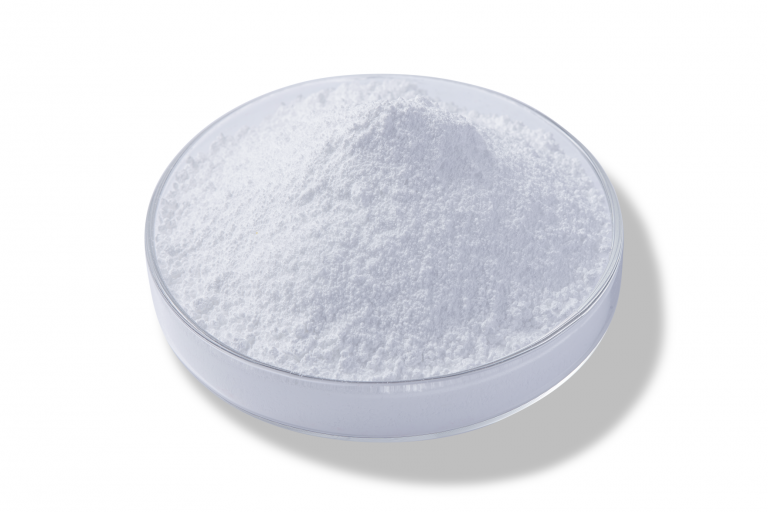
Origins: from sand and glass to engineered powders
Silicon dioxide began as something familiar—sand, quartz, the backbone of glass. Early industrial uses treated it as an inert filler. Over decades, manufacturers learned to control particle size, surface chemistry and porosity. Those changes turned silica into a performance lever: controlled dispersion, predictable reinforcement and tunable surface activity. The shift was technical, incremental and often driven by a single need—do more with less mass and less compromise.

Technical turning points that shaped modern use
The decisive advances were process-driven: precipitated and fumed silica processes, milling and spheroidization to produce consistent powders, and surface treatments to change hydrophobicity. These attributes govern how silica behaves in rubber, coatings, adhesives and battery slurries—properties such as Payne effect, bound rubber fraction and rheology. A clear inflection came when tire compounders began specifying engineered beads for rolling resistance and wear at events like the K trade fair in Düsseldorf, where suppliers demonstrated formulations that used micropearl silica alongside comparative data. That single trade show reflected broader momentum: formulators demanded materials characterized by narrow particle-size distributions and reproducible surface energy, not simply lower cost.
From lab to plant: what I learned about scale and mistakes to avoid
Scaling a lab formula exposes weaknesses in raw material selection. I saw three repeating mistakes: choosing a silica grade without matching compounding equipment, assuming dispersion would scale linearly, and ignoring moisture control. Proper selection begins with target metrics—viscoelastic response, mixing torque, and downstream processing behavior. Tests used by formulators—dynamic mechanical analysis and practical milling trials—reveal how a powder will behave. If a supplier can’t provide batch-level particle data, specific surface area and loss-on-drying numbers, walk away or expect surprises on the line.
Comparative insight: viable alternatives and when to pick them
When you evaluate powders, you’re choosing among fumed silica, precipitated silica, treated silicas, and engineered beads. Fumed grades give high surface area and thickening; precipitated silicas offer tunability at scale; engineered beads (microbeads) provide tight particle-size control and flow benefits. Each has trade-offs: dispersibility vs. reinforcement, cost vs. consistency. Use fumed silica for low-load thixotropic effects, choose precipitated for broad reinforcement, and select microbeads when mixing uniformity and packing density directly affect product performance.
Real-world anchors and practical credibility
My observations come from long-form exposure to material development and field trials with tire and sealant formulators who publish benchmarking data and attend major industry forums. The K trade fair example and the adoption patterns reported there represent verifiable industry momentum toward engineered silica forms. Manufacturers now expect detailed specifications and reproducible batches; they test against standard performance metrics used across the rubber and coatings industries. That practical rigor is why engineered powders moved from laboratory curiosity to production mainstay.
Final synthesis: why this matters and where suppliers fit
The arc from raw silicon dioxide to specialty powders is a story of tighter tolerances and clearer performance contracts. For product teams the takeaway is simple: match the powder’s measured attributes to the performance requirement, insist on batch data, and prototype early at production scale. Where precision and reproducibility matter most, an established supplier who offers consistent chemistry, documentation and logistics becomes part of the solution; that’s the role I’ve seen fulfilled by companies like JSJ Silica in real-world projects—supplying materials that let formulators turn specification into repeatable product performance.