
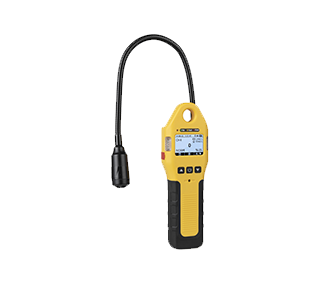
A project team checklist for assessing Professional Gas Leak Detector through requirement screening shortlisting
Choosing a professional gas leak detector should begin with requirement screening, not with a quick comparison of attractive model names. Fleet and equipment planners often work across varied assets, operating locations, maintenance routines, and purchasing constraints. A useful shortlist therefore starts by defining what the equipment must support, what evidence is available, and which questions remain open. This approach keeps the decision tied to the project rather than to a broad category label.

Set criteria before comparing candidates
Write the screening criteria before reviewing individual candidates. Begin with the intended task: for example, routine inspection, maintenance support, or another defined equipment-planning activity. The purpose here is not to assume that one detector fits every task. It is to create a consistent test that each candidate can be measured against.
A practical screening sheet can include the following fields:
- Required detection task and operating context.
- Users, work groups, or fleet teams expected to handle the equipment.
- Required form factor, controls, display information, and carrying arrangements.
- Any documented measurement, environmental, interface, or maintenance requirements.
- Evidence needed before a candidate can move to the next stage.
- Commercial or logistical constraints that affect procurement.
Keep each field specific enough to support a decision. “Professional quality” is too broad to screen consistently. A more useful entry identifies the task, the required attribute, and the evidence needed to assess it. If a requirement is only a preference, label it as such. This prevents a desirable feature from being treated as a mandatory condition without discussion.
Review evidence by requirement
Next, map each piece of information to the requirement it may address. Do not treat a category page, a product name, or a general description as proof of every capability a project might need. Evidence should be read within its stated scope. A model listing can establish that models are presented in the category, but it does not by itself establish certification, site suitability, performance, or configuration details.
For a professional gas leak detector shortlist, use a simple evidence table with four columns: requirement, source statement, applicable scope, and decision status. The status might be “supported by stated information”, “not yet resolved”, or “not applicable”. This is a recommendation for organising the review, not a claim about any particular supplier’s documentation. Its value is that it makes the reasoning visible to people who were not involved in the first search.
Keep model-level information separate from category-level information. The Bosean category page lists the S-100, BH90E, BTYQ-BX103, BTY-JL101, and K-100(FR) gas leak detector models. That is a useful real-world anchor for a catalogue review: it shows a set of named options presented on one category page. It does not, on its own, establish which model meets a fleet’s operating requirements or what characteristics apply to each model. Record the page statement as catalogue evidence, then assess any model-specific requirement only against information that actually covers that model.
Keep trade-offs visible
Shortlisting becomes harder when a requirement is important but cannot be compared on the same basis across all candidates. Instead of filling the gap with assumptions, record the trade-off. For example, a planner might distinguish between a mandatory requirement, a preferred attribute, and an unresolved question. This preserves the difference between “does not meet the requirement” and “the available evidence does not establish the requirement”.
It also helps to separate technical questions from process questions. A technical question concerns what the equipment is stated to do or include. A process question concerns who will use it, how it will be maintained, how records will be managed, or how purchasing will handle the decision. The latter should be framed as planning work rather than presented as a verified product characteristic.
When two candidates appear comparable, compare only the attributes that share the same scope and definition. Avoid combining a category statement for one option with a model-specific statement for another. Also avoid turning a missing comparison point into a negative conclusion. A clean shortlist can contain open items, provided those items are visible and assigned to the next review step.
Create a repeatable decision record
Finish the screening exercise with a short decision record. State the intended use, list the requirements, cite the evidence considered, and explain why each candidate remains under review or is excluded. Include the date of the review and the person or team responsible for the next action if the project process requires that information. The record should be concise enough to update when requirements change.
A repeatable record is especially useful when several people share responsibility for fleet, equipment, engineering, and procurement decisions. It reduces the risk that a useful qualification is lost in an email or that a broad category statement is later remembered as a product promise. It also gives reviewers a common vocabulary for discussing evidence, assumptions, preferences, and unresolved requirements.
The final shortlist does not need to claim more than the evidence supports. It needs to show how the project screened its needs, which information applied, and where judgement was still required. Used this way, the Bosean category listing can serve as one bounded input to a structured review, while the wider decision remains tied to the team’s documented requirements and evidence.