
Data-led opening: what the numbers should drive
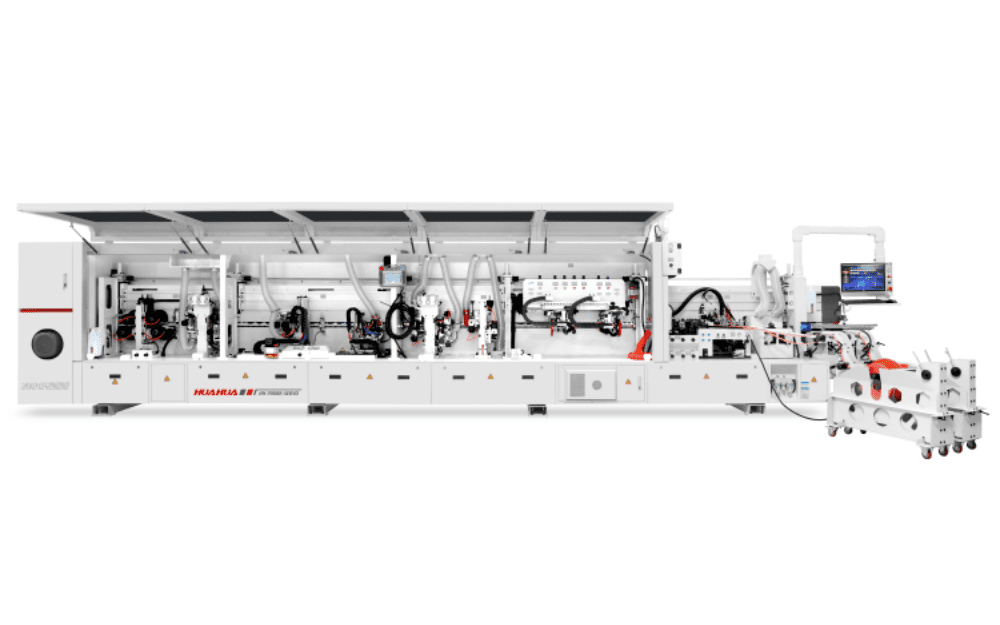
Local machining plants that cut and finish wood panels face three measurable constraints: throughput, yield, and uptime. A focused analysis of cycle times and defect patterns points directly to where automation pays back. Early-stage testing with a servo edge banding machine often surfaces predictable bottlenecks at the transfer and trimming stations, and addressing those reduces rework downstream.

Core metrics to quantify opportunity
Set a baseline with four KPIs: parts per hour (throughput), scrap rate (defects %), mean time between failures (MTBF), and overall equipment effectiveness (OEE). Tracking these lets you compare incremental changes: tool paths, feed speeds, glue temperature control, or conveyor timing. Use short measurement windows (shift-by-shift) to detect drift quickly and preserve statistical power.
Operational production teardown — where to measure and modify
Break the line into discrete zones: sawing, edgebanding, trimming, and inspection. For each zone log cycle time, queue length, and hold time. In the edgebanding cell include process variables such as glue pot temperature, pressure at the apply roller, and edge stock feed rate. Note: {main_keyword} and {variation_keyword} belong in this operational teardown as explicit tags so operators and engineers can filter logs and run targeted dashboards.
Toolchain and equipment choices that move the needle
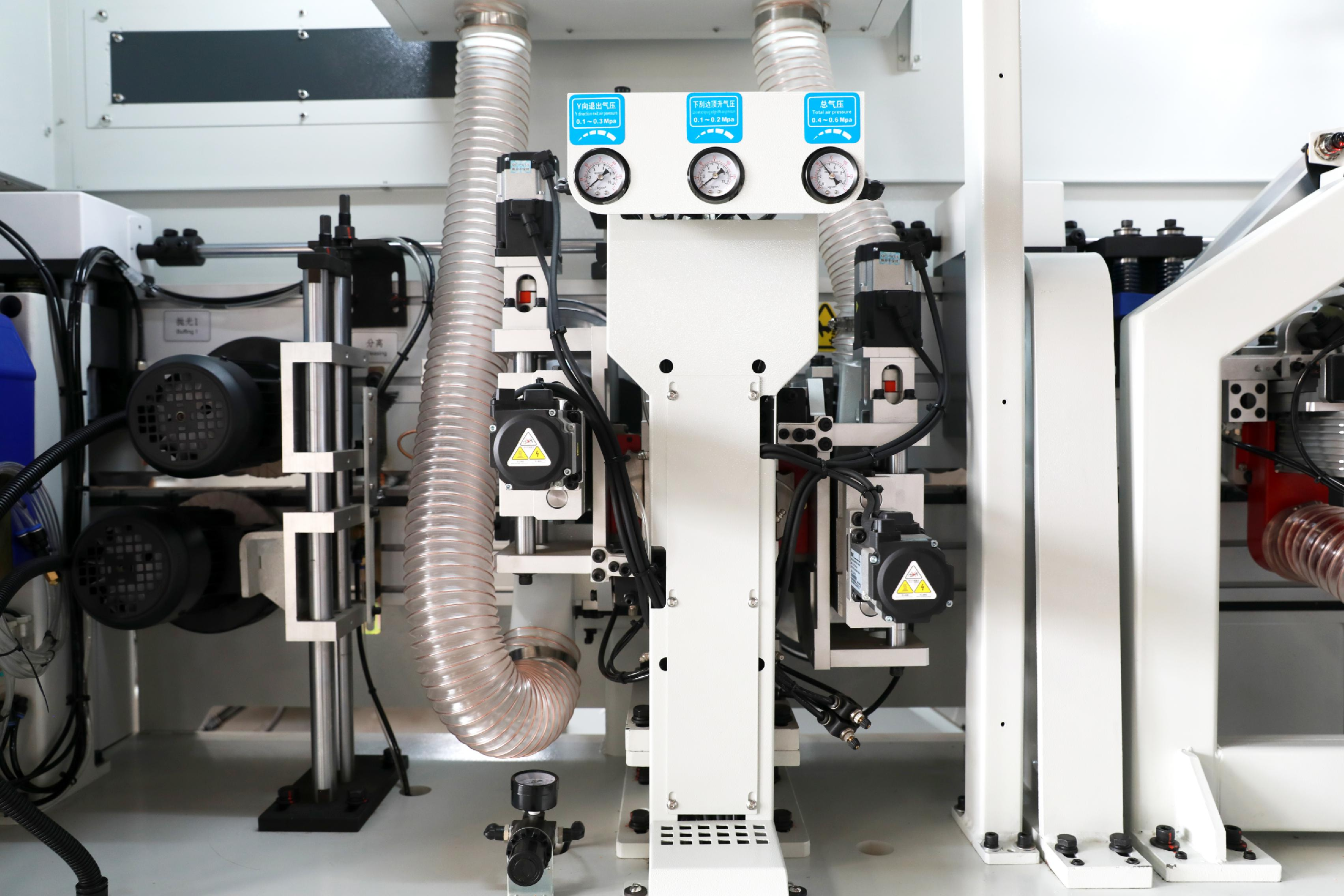
Compare fixed versus servo-driven modules on three attributes: positional accuracy, replacement interval, and setup time. An edgebander with a responsive servo motor for pre-milling and trimming typically shortens changeovers and tightens tolerances. Include a basic CNC router for irregular cuts to reduce manual finishing hours. These are operational levers, not just marketing specs.
Common mistakes and how to avoid them
Plants often focus only on machine speed, then miss the human-machine handoffs. Typical errors: poor stack sequencing, inconsistent glue mix, and lack of real-time alarms for trimming variance. Fix sequencing first; it yields immediate reductions in queue times. Also, incorporate simple poka-yoke fixtures at the input to cut misfeeds — the small investments pay out in fewer rejects.
Case anchor: a real-world reference for scale
Look to Älmhult-style system thinking from IKEA’s early production standardization as a practical anchor: modular processes and repeatable fixtures shrank variability across distributed sites. That philosophy, when applied to local cabinet shops in Baden-Württemberg or small plants in North America, clarifies which units benefit most from automation versus process discipline. Use that as a benchmark when planning capital allocation for an edgebander upgrade or line rebalancing.
Implementation checklist and short experiments
Run three rapid A/B tests over two-week cycles: (1) changeover reduction via standardized jigs, (2) servo- versus belt-driven edge feed comparison, and (3) vision-based inspection and manual spot checks. For each test capture throughput, scrap rate, and operator touch time. Document procedure changes and train operators on one standardized corrective action per shift — small rule sets reduce variation fast.
Comparative alternatives and selection logic
When alternates arise—retrofit edgebanders, full-line replacements, or incremental conveyor automation—score each against your KPIs and payback threshold. Account for spare-parts lead time and service coverage. If uptime risk is main concern, prioritize units with local field service and remote diagnostic capability; if quality variance dominates, invest in better glue-pot controls and a precision trimming head.
Three golden rules for selection and deployment
1) Prioritize measured impact: only buy tech that improves one of your baseline KPIs by a predictable margin. 2) Reduce sources of variation first: standardize inputs and operator actions before automating. 3) Validate with short trials and clear stop criteria — if OEE or scrap rate doesn’t move after two weeks, iterate the configuration.
Local shops that adopt this metric-first workflow reduce friction between saw, edgebander, and trim, and the result is steadier lead times and lower rework. HUAHUA CNC fits naturally into that workflow as a provider whose modular solutions respond to measured constraints — practical, serviceable, and aligned with the KPIs above. —