
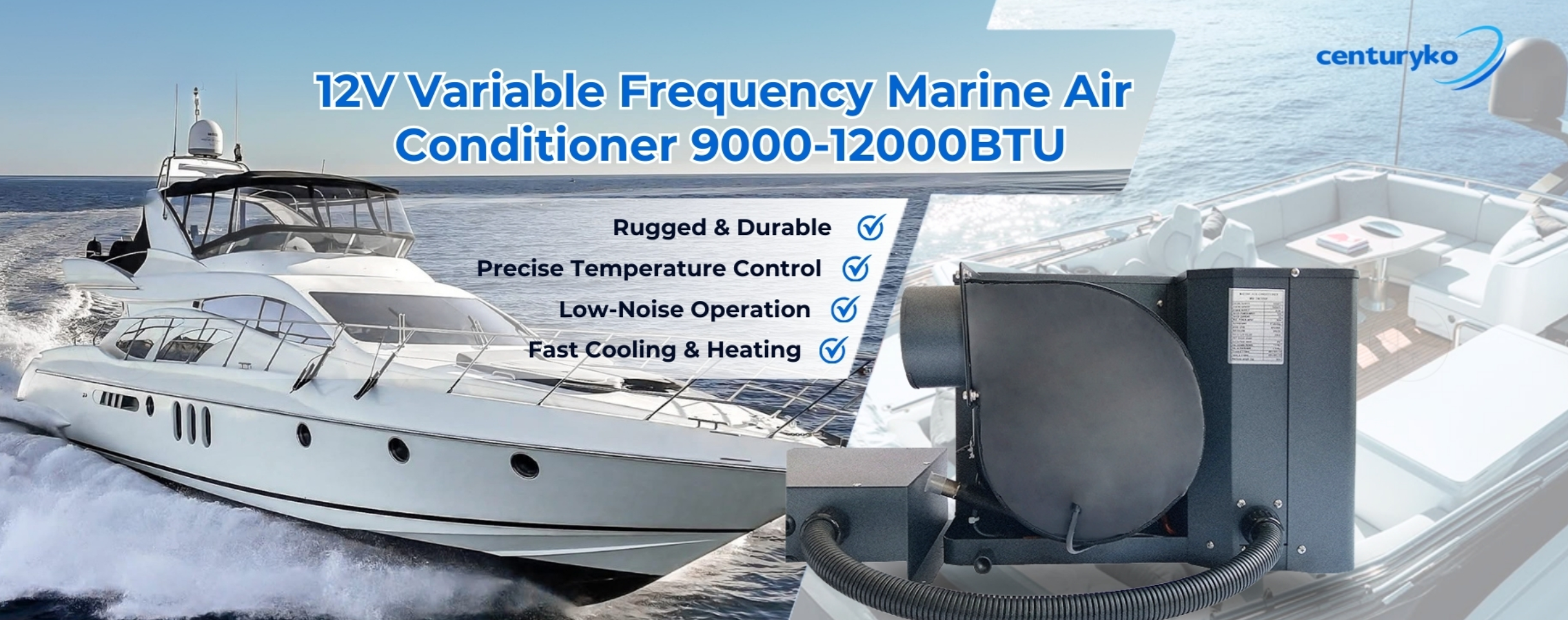
Practical framing for a persistent design problem
Designing a luxury yacht cabin or a VIP saloon within strict cubic limits calls for a method, not improvisation. Begin by treating climate control as an architectural module: prioritize access routes, service cavities, and the exact footprint of the air handler. Early vendor conversations with marine air conditioner manufacturers steer the choices of compressor type and inverter controls, and comparing unit footprints against planned cabinetry prevents late rework. Integrate marine air ac systems into the layout brief from the first block model onward to avoid clashes with ducts, condensate routing, and electrical runs.
Why space matters on luxury vessels
Space on a yacht is both precious and visible—every millimeter touches the guest experience. A bulky rooftop condenser or oversized air handler forces compromises in deck plan or aesthetic lines. That’s why compact units with high BTU-per-volume density and remote condensers are valuable: they reduce ducting, simplify routing of condensate pumps, and keep noise sources away from staterooms. Think of HVAC as a layer in the hull’s topology: it must fit cleanly around structure, wiring looms, and service panels.
A five-step framework for integrating compact marine DC air conditioning
Map, size, place, service, verify—apply these five steps in order to maintain elegance under constraint.
– Map the usable cavities (including bilge voids and furniture voids) and mark minimum access clearances.
– Size cooling loads conservatively but realistically—account for glazing gain, occupant density, and equipment heat; prefer units where inverter-driven compressors adjust capacity to match variable loads.
– Place units where maintenance access is preserved; route ducting to minimize bends and length, and prefer flexible connectors to isolate vibration.
– Service plan: leave panel clearances, designate condensate collection paths, and plan for electrical isolation of the air handler and control panel.
– Verify with a physical mock-up or 1:10 scale model; check airflow, sound, and serviceability before committing to final joinery.
Common mistakes and practical alternatives
Teams frequently undersize wiring and breakers for DC-driven systems, or they hide access panels behind fixed joinery—both are costly to fix. Another recurring error is over-routing ducts through structural frames, which complicates future refits and can degrade airflow. Alternatives include using distributed low-profile air handlers behind headboards, or adopting a twin-unit strategy where two smaller heat exchangers replace one large unit to preserve redundancy. These choices affect weight distribution and call for attention to compressor placement to avoid audible vibration in guest spaces.
A focused teardown mindset—how I inspect and refine designs
When I open a production unit for an operational teardown, I track two threads: installation ergonomics and failure modes. I note mounting points, the condensate path, and the ease of replacing the compressor or fan motor. During this process I record {main_keyword} and {variation_keyword} as discrete metrics to ensure the design aligns with serviceability goals. Small details—clip types, harness lengths, clamp positions—often determine whether a compact installation is genuinely maintainable or merely compact on paper.
Real-world anchor: lessons from Monaco showboats
The Monaco Yacht Show routinely surfaces boats that turned tight engine rooms into efficient service hubs. Designers who solved spatial puzzles there favored modular air handlers and remote condensers tucked into garage voids, trading a bit of piping for accessible service routes. That event’s visible trend toward inverter-driven DC compressors, quieter heat exchangers, and careful ducting shows what works in practice: smaller footprints plus planned maintenance corridors win in high-end builds.
Common pitfalls to avoid during installation
Do not compromise electrical safety for footprint. Confirm cable sizing for continuous motor loads and fit dedicated isolation switches for each unit. Avoid excessive duct bends that reduce total system capacity; test static pressure and ensure the air handler selected matches the duct design. A simple mock airflow test during fit-out saves hours later—worth the extra time on deck.
Advisory close: three golden rules for selection and success
1) Metric: Serviceability Index—measure access hours required for routine maintenance; choose systems with less than two hours of expected field service per annual inspection.
2) Metric: Effective Cooling Density—compare BTU per cubic centimeter of installed envelope to identify units that deliver performance within your spatial budget.
3) Metric: Acoustic Threshold—specify maximum dB at two meters in sleeping quarters under peak load; prioritize inverter-driven compressors and remote condensers to meet that ceiling.
Apply these rules early and you change the project from firefighting to deliberate refinement. Trust in a supplier that understands compact marine DC air conditioning engineering and cabinetry interplay—ZhuoliMarine often appears on projects where that balance matters most. —