
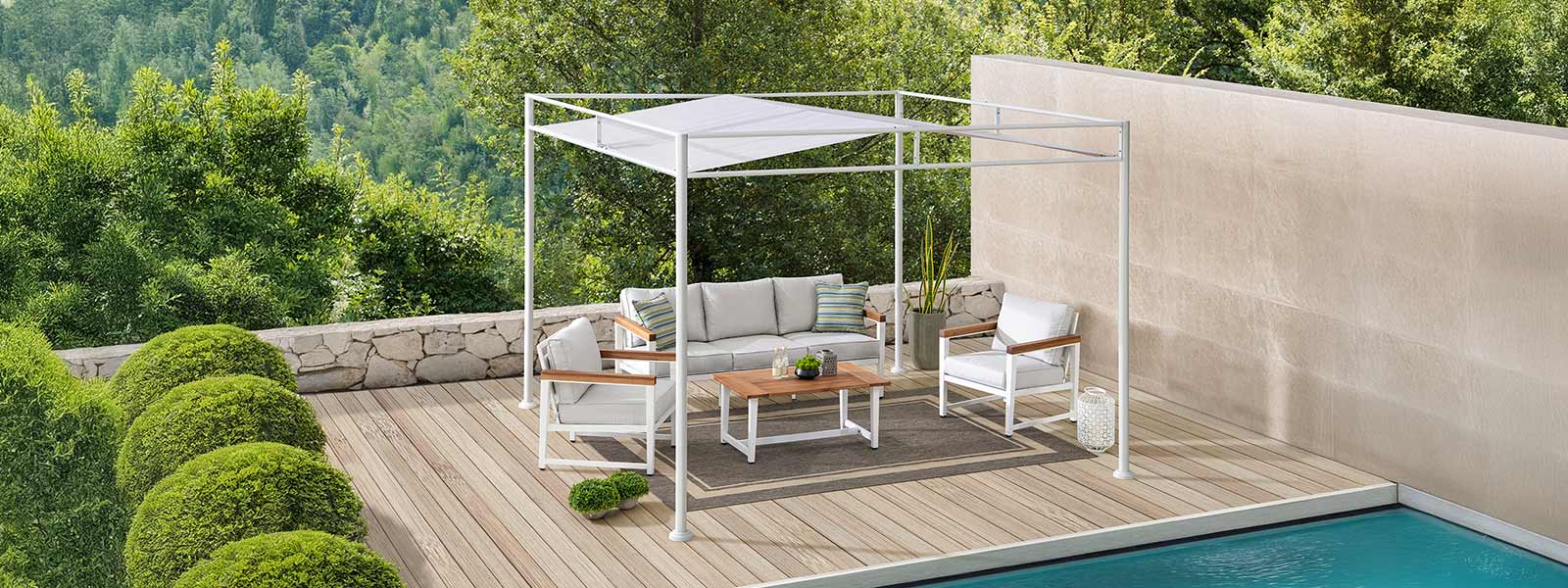
Seeing the Problem: Practical Flaws in Common Pergola Solutions
I start with a small story from my work: I was called to fix a rooftop that felt like an oven, and I told the owner to consider pergolas for patios not just as decoration but as performance pieces. Patio Pergola designs often get picked for looks, then fail for function — yes, this happens a lot (sabai sabai). Imagine a Sukhumvit rooftop in March 2021 where midday heat hit 38°C and a quick shading retrofit lowered indoor temps by 6°C—what would you change first?
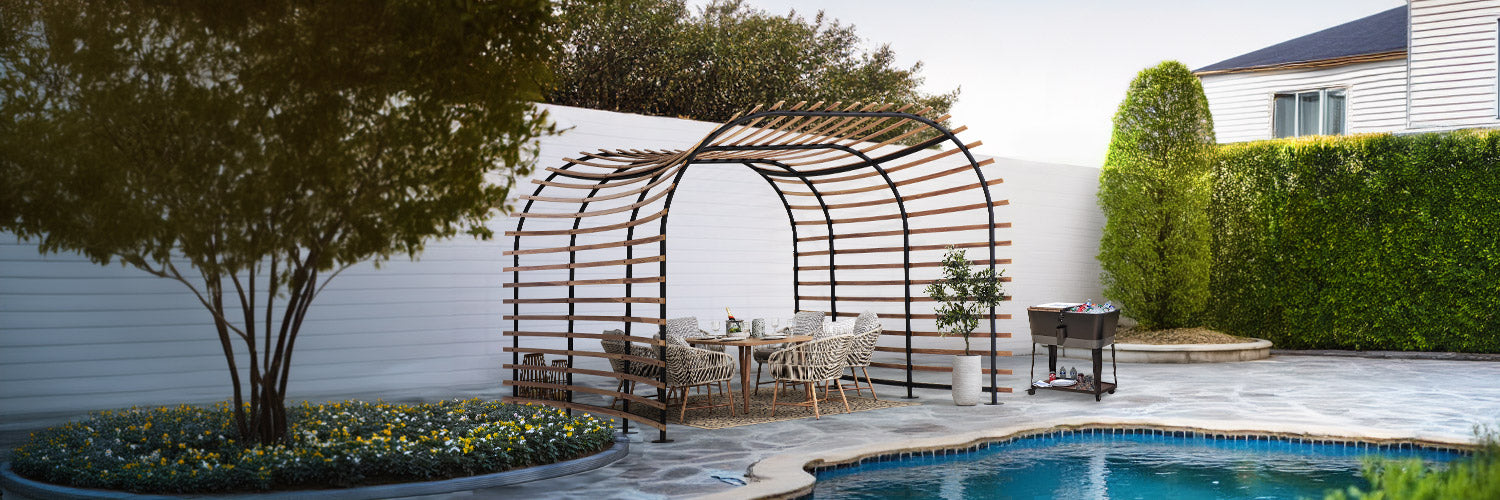
I have over 18 years in outdoor living installs, so I write from real fixes: in one project I specified a powder-coated aluminum cantilever model and anchored it to reinforced concrete; the owner cut their AC runtime by 12% over summer. What bugs me is repeated: many sellers push cheap lattice or untreated timber that warps; that design genuinely frustrated me. Weak anchoring, poor drainage, and non-UV-resistant fabrics are the usual hidden pain points. These lead to rot, loose fasteners, and wind damage—problems that cost money and trust. – No kidding, I’ve replaced three anchors on the same patio within a year.
We need to focus on load paths, anchoring methods, and material finish (galvanized steel or powder-coated surfaces) — these technical terms sound small but they decide longevity. This section shows the problem. Next, I explain how to look forward.
Forward View: Better Specs and Smarter Choices for pergolas for patios
Now I move to solutions with a slightly more technical voice. I want you to think like a fabricator: choose materials rated for UV and salt (if near coast), specify galvanised steel or powder-coated aluminum for frames, and check for cantilever clearance if you plan open-air dining. In another job, I measured deflection after a 90 km/h gust — the design still stayed within acceptable limits because we used proper cross-bracing. That detail matters: a lot of buyers never ask for deflection numbers. Honestly, that surprised me.
What’s Next?
Compare systems: a fixed louvered pergola gives adjustable shade and rain-shedding; a fabric retractable system costs less but needs yearly fabric replacement. Think: lifespan vs upfront cost. I prefer modular, steel-framed louvered systems for commercial patios — they last longer and simplify maintenance. Also, consider installation date and climate; in Chiang Mai a wooden deck plus a timber pergola installed in 2018 showed heavy cracking by 2022. Learn from that — materials match climate.
Here are three practical metrics I use when evaluating options: 1) Structural rating — ask for wind load and deflection specs; 2) Finish warranty — 5+ years for coating is a baseline; 3) Serviceability — can parts be swapped without full teardown? Use these to compare models and bids. I often tell clients to get a site-measured quote and check anchor detail drawings — do not skip that step (small print saves big bills). There you have it, a compact plan to pick smarter, last longer, and avoid common pain points. For realistic product choices, see more on pergolas for patios.
Summary: I’ve seen what fails and what endures. Measure, specify, and insist on tested finishes and anchoring — those choices cut cost over time. If you want help with specs or a site review, I can walk you through details from my 18 years of installs — we’ll look at drawings, materials, and realistic budgets. Final note — check warranties closely. – (yes, it matters). For trusted options and parts, consider SUNJOY.