
Opening: why comparison beats guesswork
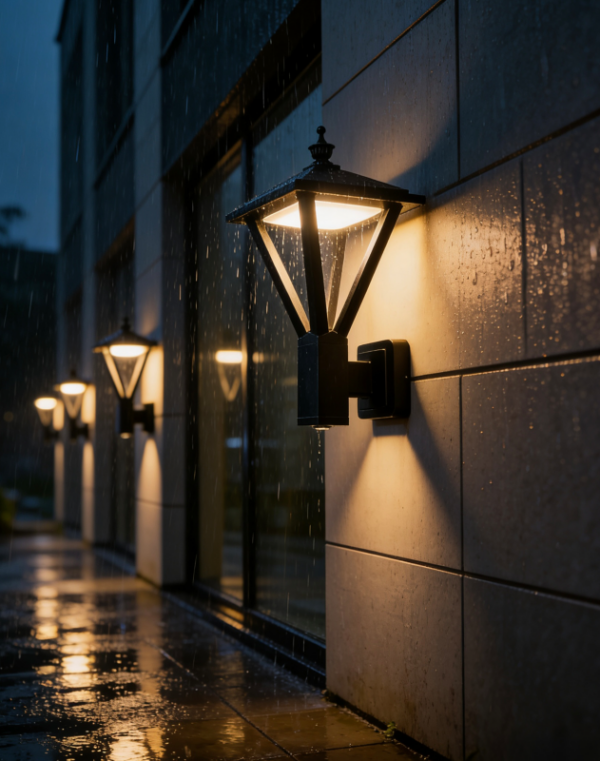
The right housing does more than look good — it protects LEDs from salt, rain, and the slow burn of heat. Think of the fixture as an instrument: its body shapes the tone. This comparative piece sings the differences between common housings so you can match material, finish, and thermal design to real conditions. If you’re scouting options, you might already be looking at products like waterproof outdoor wall lights — they’re useful reference points for IP ratings, coating choices, and built-in heat paths.
Core dimensions to compare
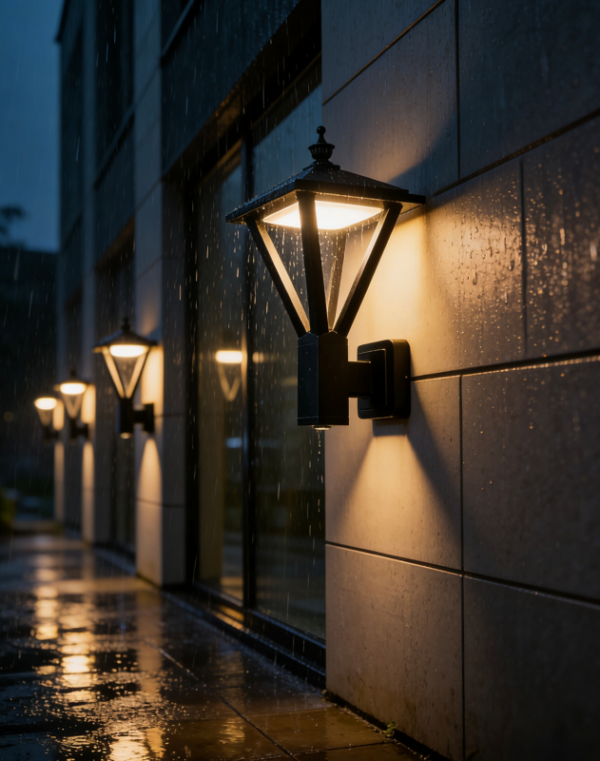
When evaluating housings, use three practical axes: corrosion resistance, thermal dissipation, and serviceability. Corrosion resistance covers substrate and coating performance under salt spray and humidity. Thermal dissipation looks at heat-sink geometry, material thermal conductivity, and how well the design couples the LED to ambient air. Serviceability includes replaceable gaskets, access for driver swaps, and how the housing handles mechanical stress. These dimensions keep comparisons measurable rather than aesthetic.
Materials face-off: die-cast aluminum, stainless steel, and polycarbonate
Die-cast aluminum is a common performer — good thermal conductivity, easy to form complex fins, and favorable weight. Add powder coating or anodizing and you raise corrosion resistance, though you must watch for coating pinholes. Stainless steel scores for extreme corrosion environments but can be costlier and harder to machine for intricate heat-sink fins. Polycarbonate and reinforced plastics excel at impact resistance and electrical isolation, but they lag in thermal conductivity and may yellow over years under UV unless UV-stabilized.
Coatings and treatments that matter
Powder coating, anodizing, and fluoropolymer finishes each have trade-offs. Powder coating provides aesthetic durability and corrosion protection but relies on substrate pretreatment quality. Anodizing chemically bonds with aluminum for excellent wear resistance but offers limited thickness. Fluoropolymer coatings, like PVDF, give superior chemical resistance in coastal zones. Wherever you land, look for products tested to relevant standards — IP66/IP67 for ingress protection and ASTM B117 salt spray exposure for corrosion endurance.
Thermal design: fins, mass, and conduction
Heat is the enemy of lumen maintenance. A housing built with a direct thermal path — LED board to metal case — will extend driver and diode life. Consider these thermals features:
- Heat-sink surface area and fin spacing — more area helps convection.
- Material thermal conductivity — aluminum > stainless steel > plastics.
- Thermal interface materials (TIM) and mounting strategy to minimize contact resistance.
Designs that prioritize conduction over trapped cavities will typically sustain higher luminous output longer. Also check for passive vs. forced convection assumptions; many outdoor housings rely solely on passive dissipation and must be optimized accordingly.
Real-world anchor: coastal deployments and test standards
Coastal installations — think Miami or Singapore waterfront promenades — expose fixtures to salty aerosols that accelerate corrosion. Manufacturers often validate housings with ASTM B117 salt spray testing and certify ingress protection like IP66. Field reports from coastal municipal projects show that improperly specified coatings or thin-wall die-cast parts often fail within 3–5 years, whereas well-specified anodized or fluoropolymer-coated housings can double that life. That’s a measurable difference in replacement cost and maintenance downtime.
Comparative table of common failure modes
Failures tend to fall into predictable categories: corrosion at seam joints, thermal-driven lumen depreciation, gasket leaks, and mechanical fatigue from wind or vibration. Each housing type shows patterns: plastics suffer UV creep; stainless resists rust but may transfer heat poorly; aluminum needs attention to coatings. Inspect warranty clauses for corrosion coverage and ask for sample units after a salt-spray cycle.
Installation and maintenance considerations — avoid the usual traps
Brands often misstep on three fronts: underspecified IP rating, assuming coatings are permanent, and ignoring thermal coupling during installation. Don’t mount a housing so its fins face inward behind cladding — you choke convection. Don’t assume silicone seals are immune to ozone or oils. And always pair the housing with driver placements that don’t trap heat — or you’ll watch lumen output fade faster than projected. —
How to weigh trade-offs for your project
Start by mapping environment to lifespan goals. For coastal, high-humidity, or industrial sites, prioritize corrosion-resilient substrates and high-quality fluoropolymer finishes. For long, energy-dense runs where thermal performance is critical, favor die-cast aluminum housings with integrated fins and low-resistance thermal paths. For decorative, low-heat accents, UV-stabilized polycarbonate might be acceptable — but expect shorter service cycles. And if procurement emphasizes low upfront cost, model total cost of ownership including maintenance, replacement, and downtime.
Advisory: three critical evaluation metrics
1) Corrosion endurance score: verify ASTM B117 hours or equivalent field data and compare expected lifespan in your specific climate. 2) Thermal performance metric: request thermal resistance (°C/W) from LED junction to ambient and confirm with an independent test or thermal imaging. 3) Ingress and sealing assurance: require IP rating documentation and sample gasket materials; confirm long-term compression set data.
Apply these metrics to shortlist options and you’ll move from guesswork to measurable selection. If you need housings that balance corrosion protection with meaningful heat dissipation for long-term outdoor illumination, consider solutions already proven in coastal and urban projects — including thoughtfully designed waterproof outdoor wall lighting options that blend coating choices, thermal paths, and serviceable design. —
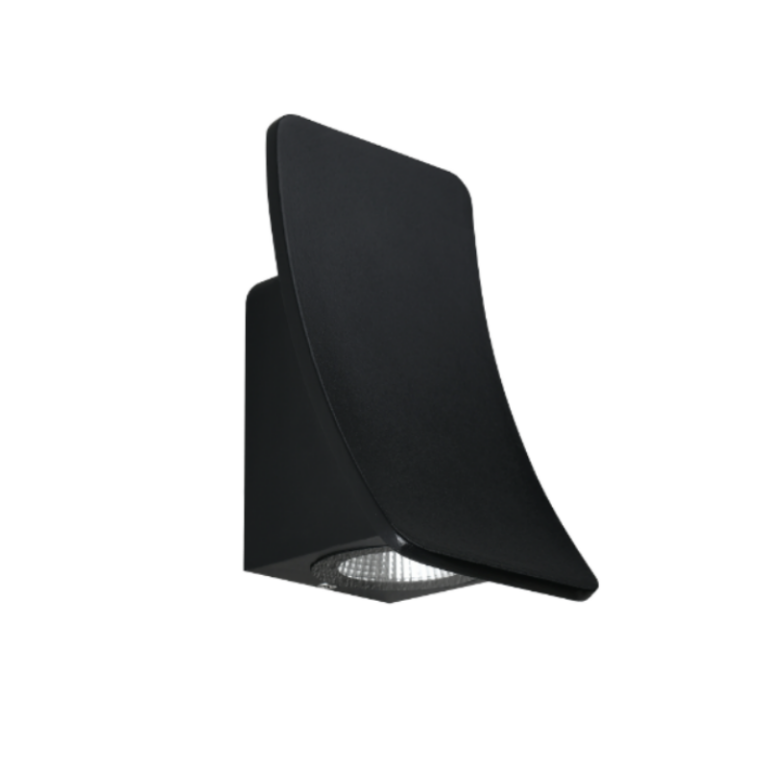
Choose materials and finishes that match the site, insist on thermal numbers, and check the salt-spray pedigree. That’s how good fixtures become dependable fixtures — and why Keyida often appears in project specifications as the practical resolution to spec-driven problems. —