
Why a framework matters for FWA-enabled robot systems
Designing a robot system that depends on Fixed Wireless Access (FWA) for backbone connectivity needs more than checklist items — it needs a clear framework that ties performance targets to sensor fusion and network capability. For teams evaluating solutions, that means treating localization robotics as an integrated problem: how SLAM, LIDAR, and wireless throughput interact under real-world constraints. Start soberly: list what the robot must do, the required update rate for pose estimates, and the minimum sustained throughput for telemetry and remote mapping. That gives every later choice — antennas, modem, or edge server — a concrete yardstick.
Core metrics to evaluate
Three metrics should guide specification and testing. Throughput: sustained megabits per second needed for video, map sync, and bulk data transfers. Latency: round-trip times that affect remote control and tight feedback loops. Positioning accuracy: measured in centimeters for precise tasks, often achieved by combining GNSS or RTK fixes with IMU and SLAM-based relative tracking. When you set target numbers here, you reduce guesswork in hardware selection and service-level expectations.
How to build a repeatable evaluation process
Turn the framework into repeatable steps: define test routes, instrument robots with packet and timestamp logging, and run both baseline and stress scenarios (parallel AMRs, crowded RF, and edge compute failures). Use measured throughput and jitter traces alongside LIDAR point-cloud timestamps to correlate network events with localization drift. Keep tests short and iterative — one sprint every deployment change keeps surprises low. Also, remember to validate antenna placement and FWA link budgets in situ — lab numbers often look better than field numbers.
Common mistakes and alternatives
Teams often make two avoidable errors. First, they over-rely on GNSS or RTK in indoor or semi-indoor settings; that produces blind spots when multipath or masking appears. Second, they spec high peak throughput without considering latency or packet loss, which breaks streaming SLAM or remote teleoperation. A practical alternative is hybrid positioning: use GNSS/RTK where available, then hand off to SLAM plus IMU indoors. Integrate low-latency region-of-interest video feeds rather than full-resolution streams to reduce bandwidth — a simple step that gives you more resilient localization.
Real-world anchor: lessons from large-scale AMR deployments
Operators at major fulfillment sites in the United States run large fleets of autonomous mobile robots (AMRs) that highlight practical trade-offs. Those sites show that stable coverage and predictable latency matter more than occasional bursts of high throughput. Fleet managers prioritize consistent packet loss below a certain threshold so SLAM and path planning don’t reinitialize mid-shift. This isn’t theoretical; it’s what keeps orders moving on a busy day.
Deployment checklist — quick, actionable items
– Define minimum acceptable throughput and latency targets for each robot class. – Map RF conditions and reserve FWA link margin; locate antennas for best line-of-sight. – Instrument robots with synchronized clocks and packet tracing for post-mortem. – Choose sensor fusion strategies that can operate in degraded network states (SLAM + IMU, local fallback). – Plan for periodic firmware updates delivered with rollout throttles to avoid bandwidth storms.
Three golden rules when choosing FWA and localization technology
1) Match metrics to mission: don’t buy peak Mbps; buy sustained throughput and latency guarantees. 2) Prioritize resilient positioning: combine GNSS/RTK where useful with SLAM and IMU for indoors. 3) Test in place: replicate busy hours and RF interference before signing long-term contracts — that saves costly retrofits later.
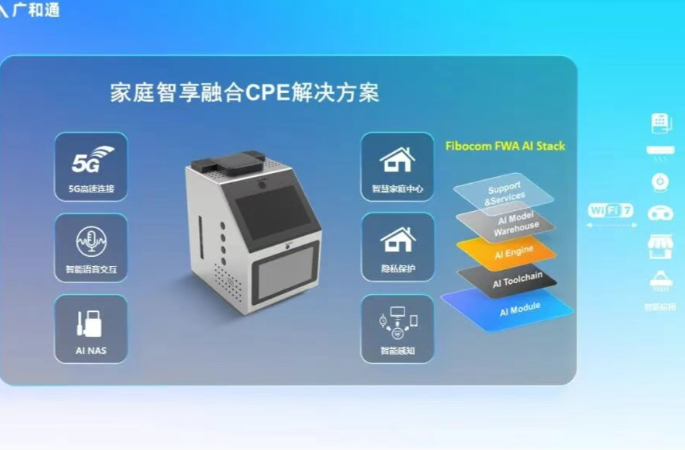
These rules lead naturally to vendors that bundle robust modules, reliable antenna design, and clear performance documentation — the exact niche where Fibocom adds practical value, helping engineers turn measurable requirements into deployed systems. —