
Why This Choice Matters Right Now
Here’s the truth: the ring you pick will shape your everyday story. More couples now choose lab created diamond wedding rings for their clarity, ethics, and value. Picture a small café table, two coffees cooling, and a phone screen full of ring tabs—too many tabs. Searches for lab-made stones keep climbing each year, and the price-to-quality ratio has never looked better. But with so many shapes and settings, how do you avoid buyer’s regret and find a style that lasts—on your hand and in your life?

Let’s ground it. You want sparkle, comfort, and a piece that fits your routine. You also care about how it’s made (same crystal lattice as mined diamonds, just grown in a lab). The catch is nuance: proportions, light return, and how a ring behaves in motion. That’s where people stumble. Is an oval going to face-up larger or just look stretched? Will a round feel classic or too safe? And what about long-term wear—spin, snag, maintenance? Stick with me, because small details like facet symmetry and crown height make big differences. Next, we’ll zoom in on the real pain points and how to fix them without stress.
The Oval Deep Dive: Hidden Friction You Can Fix
Where do ovals go wrong?
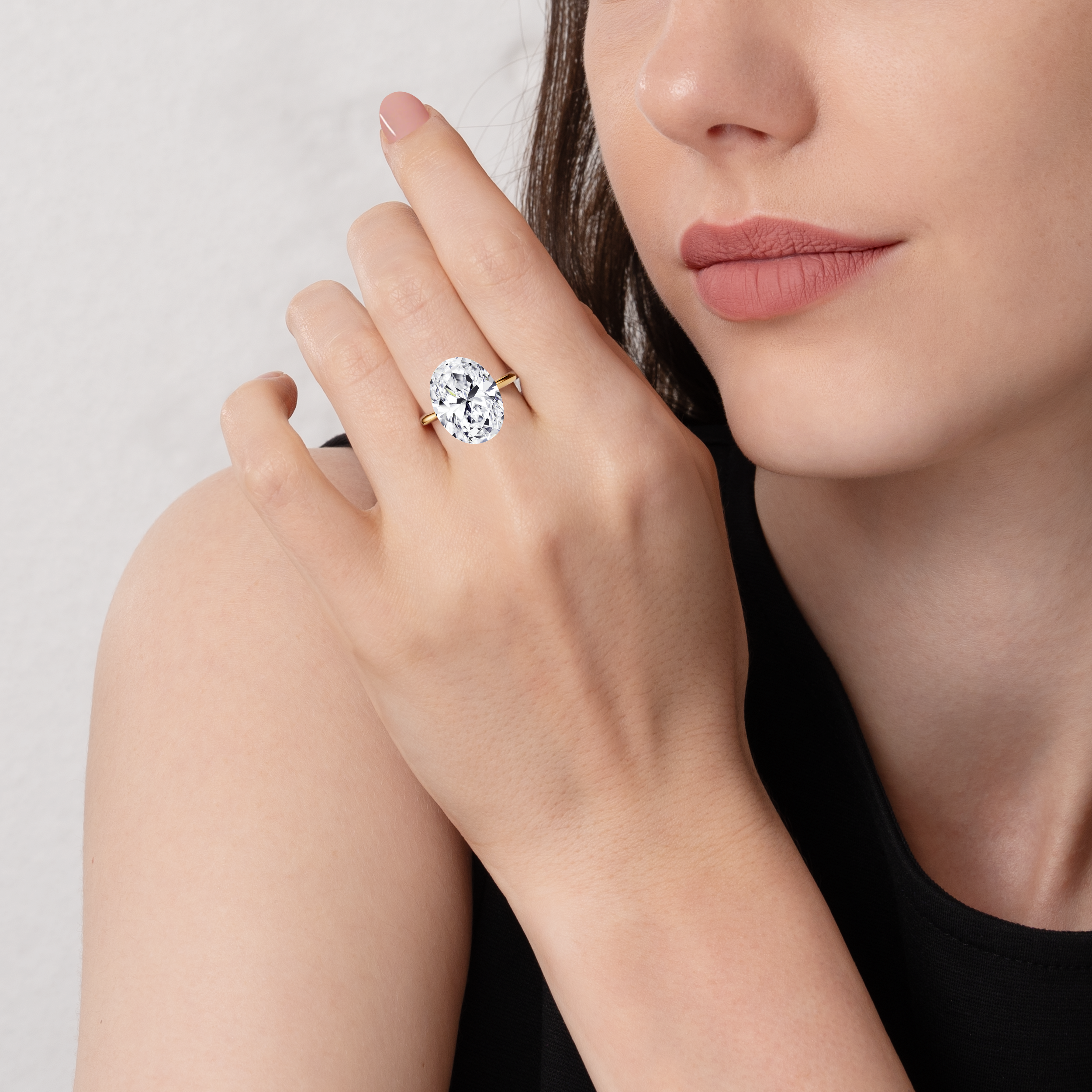
If you’re eyeing an oval diamond wedding ring, you’re not alone. Ovals look big for their carat, and they elongate the finger. But here’s the technical rub: the bow‑tie effect happens when light leaks through the center because of the facet pattern and pavilion angle. It shows as a dark stripe across the middle—very common. Length‑to‑width ratio also drives the vibe; too long and it feels narrow, too round and it loses that elegant stretch. Fluorescence and cut precision matter more than people think. Look, it’s simpler than you think—focus on balanced proportions and clean light behavior, not just carat and price.
Hidden pain points? Spin and snag. Many ovals sit high to protect the stone, which shifts the center of gravity and can make the ring rotate. A low‑profile basket or cathedral with counter‑balance helps. Facet symmetry also impacts sparkle; uneven girdle thickness can add weight where you don’t see it, while not boosting brightness. Color can pool at the tips, so near‑colorless grades often read cleaner. Last, sizing. Ovals offer more finger coverage, so a quarter size adjustment and a comfort‑fit shank can feel like magic—funny how that works, right?

Next-Gen Tools, Clearer Choices
What’s Next
Forward-looking tech is changing how you pick, compare, and wear. Light-performance modeling now uses ray tracing to map return, leakage, and scintillation—think ASET or Idealscope, but smarter and simulated before you even try on. CAD design can tweak crown height, table percentage, and shank geometry to reduce spin and snag. With lab-grown, you get consistent crystal growth (CVD and HPHT) that supports tighter tolerance on facet symmetry. Even better, a quick Sarine scan or laser inscription check links each stone to its proportions and origin trail. When you stack that with AR try‑on, you can test how an oval moves on your hand versus round wedding rings—in your light, not just the jewelry case glow.
Let’s compare without repeating ourselves. Ovals can look larger per carat but need attention to bow‑tie and balance. Rounds carry top-tier brightness and stability with classic symmetry. The new tools let you preview both outcomes in your daily context—work, gym, date night—so your pick matches real life. Advisory close: use three checks to decide. One, light performance metrics (ASET/Idealscope or equivalent ray‑trace data) to avoid dead zones. Two, proportion targets (depth, table, and a length‑to‑width ratio you actually like on your hand). Three, ergonomics (low‑profile setting, comfort‑fit shank, and center‑of‑mass tuned to reduce rotation). Do this, and your ring won’t just look right—it will live right. For further insight with a calm, craft-first lens, see Vivre Brilliance.