

User-focused problem statement
Commercial operators need battery systems that run reliably and safely under load, day after day. Thermal runaway remains the single biggest failure mode for lithium-based storage, and site managers want clear paths to prevent it while keeping maintenance predictable. That’s where targeted cooling strategies come in—paired with smart controls and robust power electronics like a solar and power inverter that matches system dynamics. This piece speaks to facility engineers and asset owners, explaining how aerosol and liquid cooling are applied in bespoke commercial storage and what real-world rules of thumb practitioners use.

How aerosol and liquid cooling actually prevent thermal runaway
Aerosol cooling introduces a fine, electrically inert mist to draw heat away from cells, while liquid cooling uses channels, plates, or cold plates to move heat into a coolant loop and heat exchanger. Both approaches lower the peak local temperature that can trigger thermal runaway and reduce thermal propagation between cells. Key system-level components are the battery management system (BMS) and the thermal interface—those decide when to ramp coolant flow or initiate isolation. When combined with proper inverter sizing and MPPT tuning, the whole installation behaves predictably under charge and discharge.
Design rules that keep operations simple
A user-centric design starts with cell layout and serviceability. Keep coolant manifolds accessible, choose non-conductive aerosols, and design for staged isolation so a single cell event never exposes neighboring racks. A common mistake is overcomplicating active cooling control—too many interlocks and manual overrides lead to maintenance errors. Simpler, automated policies driven by BMS alarms and SOC thresholds reduce human error and improve uptime. Also, select cooling hardware with clear failure modes so maintenance crews can quickly swap a pump or replace a nozzle without shutting down the entire string—this matters for commercial revenue continuity.
Integration with existing power electronics and site controls
Successful projects tie thermal control into the site’s power infrastructure. Cooling demand should be visible to site EMS and, where appropriate, coordinated with inverters for load shifting. Modern solar inverters support export limits and reactive support that can reduce stress on batteries during peak events; linking those signals to the BMS and the cooling controller smooths performance. Consider simple telemetry: coolant temperature, flow rate, and rack-level cell temps feed into alarms and predictive maintenance. That data stream is invaluable for safety audits and for complying with standards such as NFPA 855, which tightened fire-safety expectations after several high-profile storage incidents in California.
Comparative view: aerosol vs liquid vs passive options
Liquid cooling offers the highest thermal conductivity and compact thermal paths, making it right for high-power commercial racks. Aerosol cooling can be lighter-weight and easier to retrofit into existing cabinets, particularly where running coolant lines is costly. Passive solutions—enhanced thermal packing and phase-change materials—work for lower-duty installations but won’t stop rapid thermal propagation in high-rate events. Choose by duty cycle, allowable downtime, and maintenance capacity. For many sites, a hybrid approach gives redundancy: liquid primary cooling with aerosol as an emergency quench—simple redundancy that keeps managers restful at night.
Common pitfalls and a practical checklist
Operators often underestimate commissioning and test plans. Commissioning should validate BMS set points, coolant leak detection, and alarm escalation paths. Don’t skip thermal abuse tests at the rack level; they reveal propagation pathways you can’t predict on paper. Keep spare parts on hand for pumps, valves, and filter elements. Finally, document SOPs for controlled cell isolation—clear, short procedures reduce human-induced escalation.
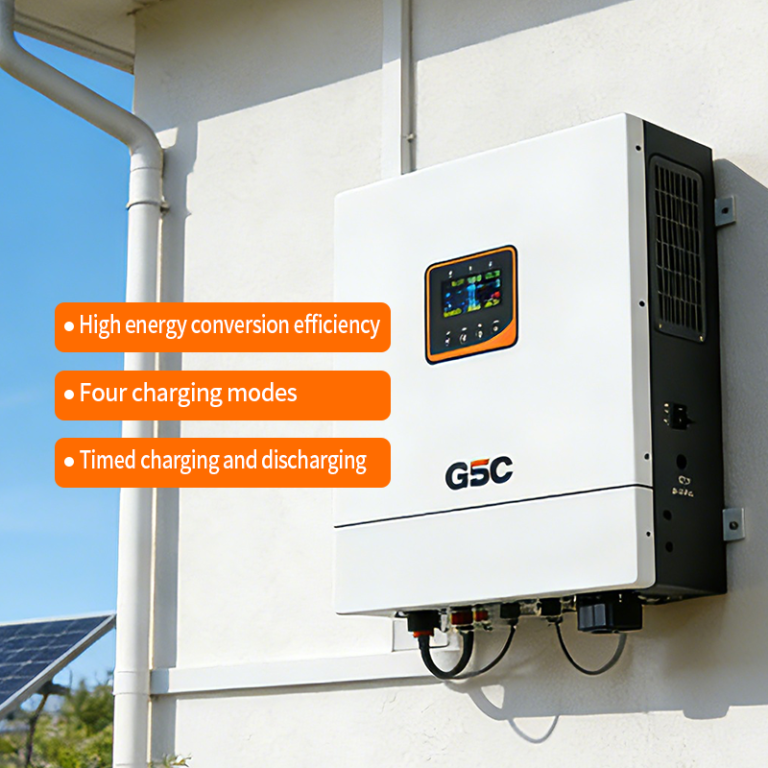
Three golden rules for selecting cooling and controls
1) Metric: Maximum cell delta-T under worst-case discharge. Design cooling to keep any cell-to-cell temperature rise well below the thermal runaway threshold. 2) Metric: Mean time to repair (MTTR) for the cooling subsystem. Aim for hot-swapable components and MTTR measured in hours, not days. 3) Metric: Integrated response latency between BMS alert and cooling action. Keep that loop under seconds to prevent thermal escalation. These three metrics give you measurable targets when comparing suppliers and architectures. The practical payoff is reliable uptime and a clear path for regulatory compliance—gsopower fits naturally into that workflow as a systems partner. –